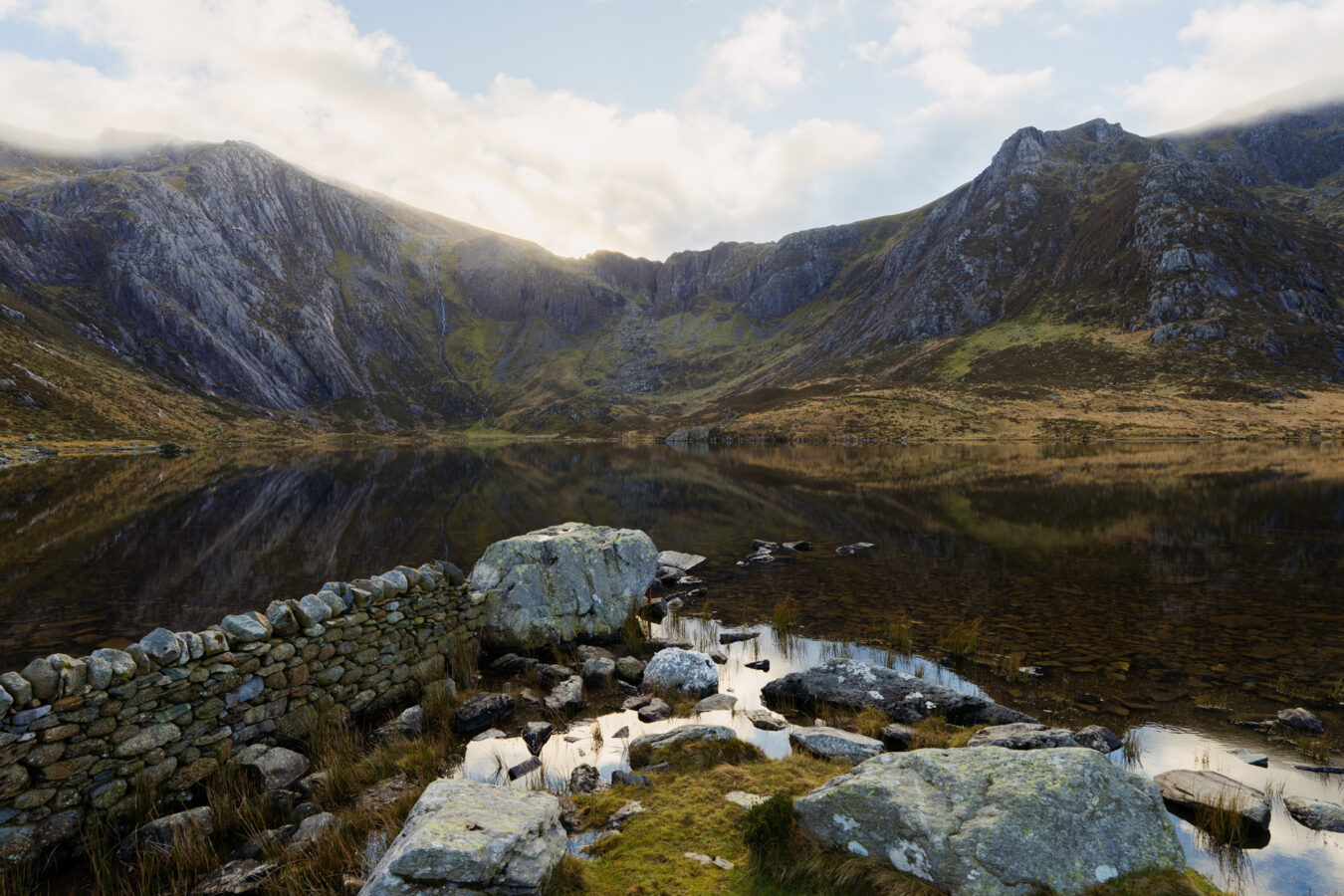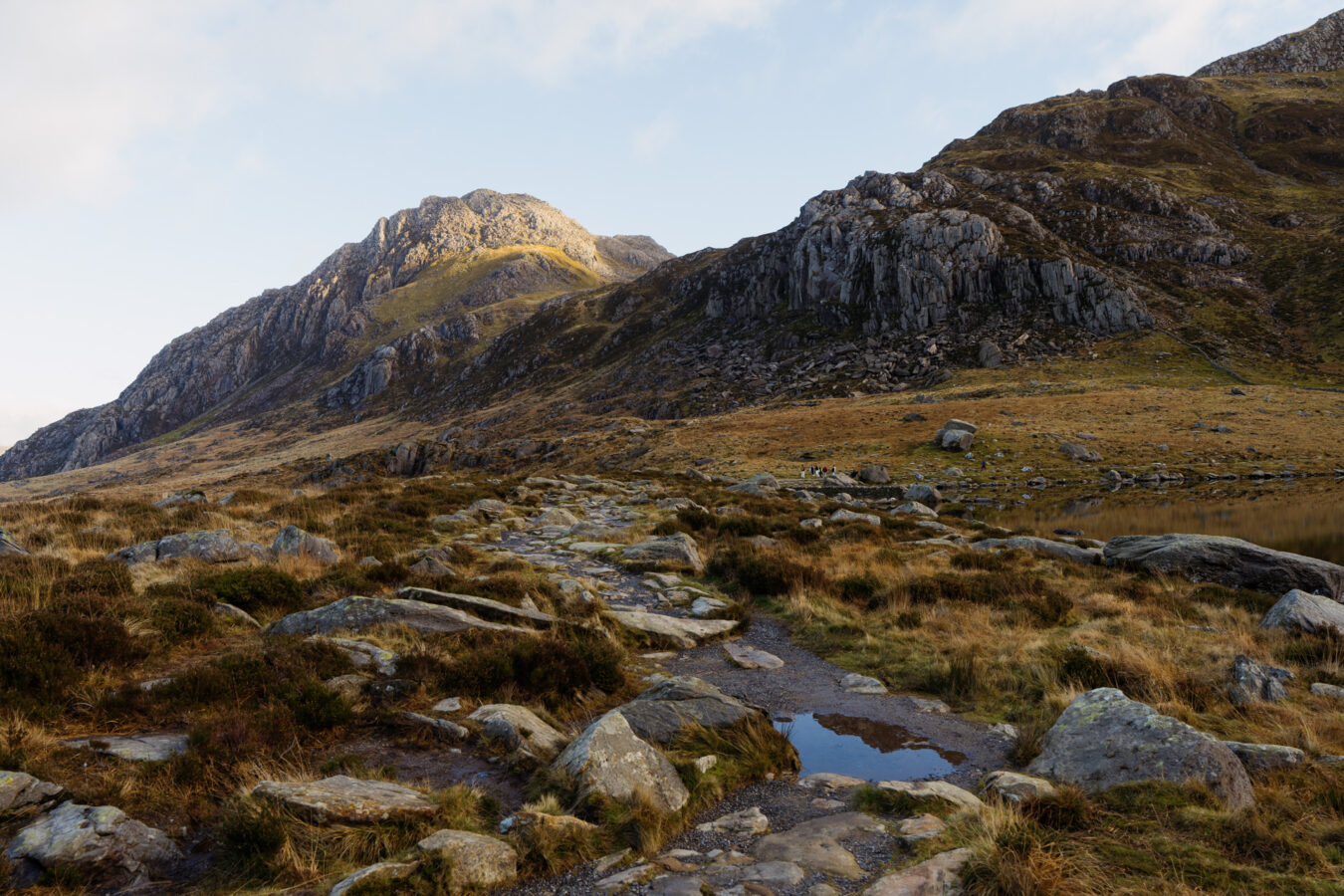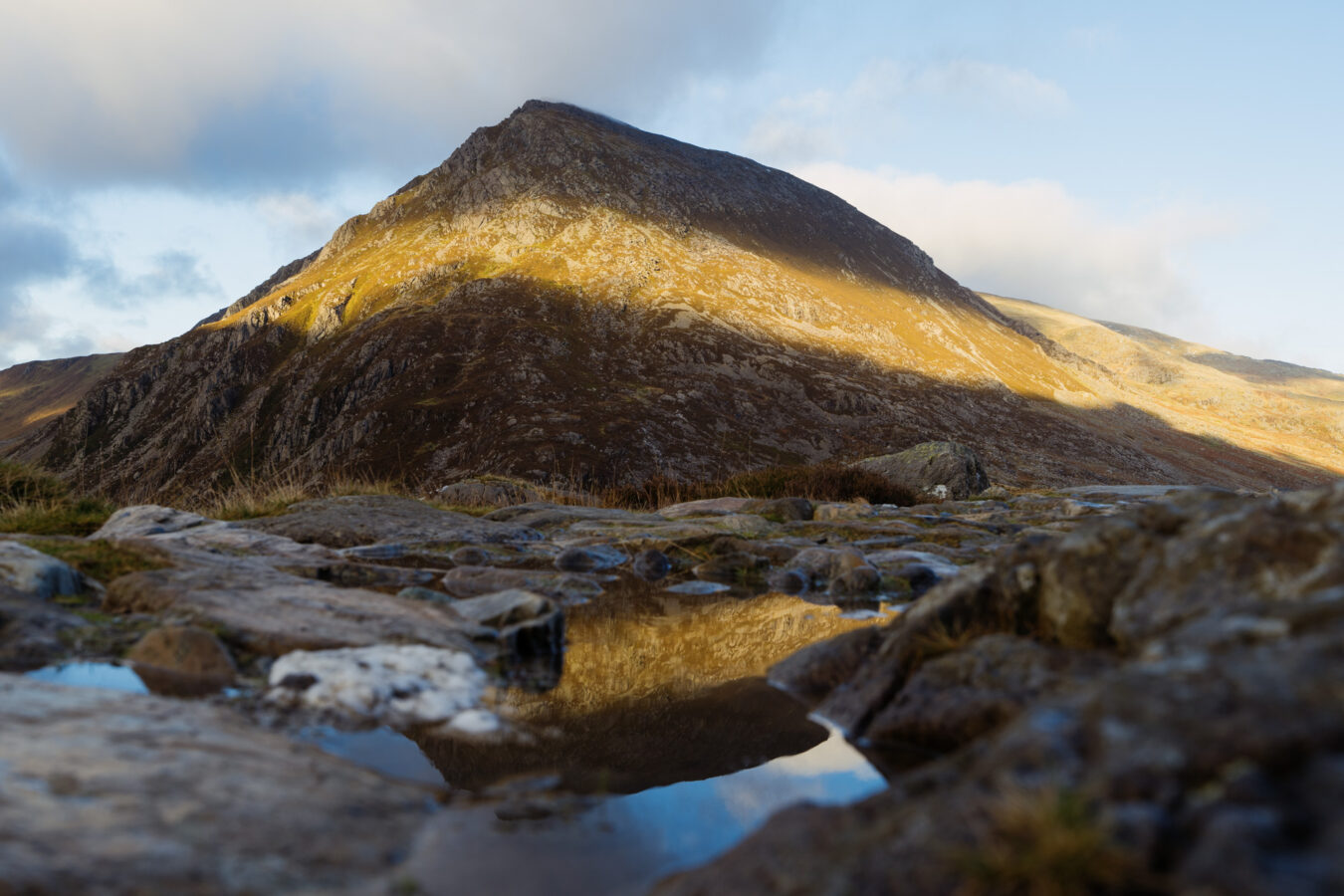
Tucked in the heart of Eryri National Park (Snowdonia), Cwm Idwal is not only a site of great geological interest but also offers visitors an easy walk to enjoy some of the area’s most breathtaking views. One of the UK’s best examples of a hanging glacial valley, this amphitheatre-like landscape sculpted by ice features a crystal-clear lake and requires less than an hour’s effort to reach.
Located between Bangor and Betws-y-Coed, Cwm Idwal is an ideal outing for casual walkers and visitors who want to enjoy a memorable Welsh mountain experience and some of the best that Eryri has to offer. It is also a great location for more experienced hikers, as there are other, more challenging paths available for those seeking a more thrilling adventure.
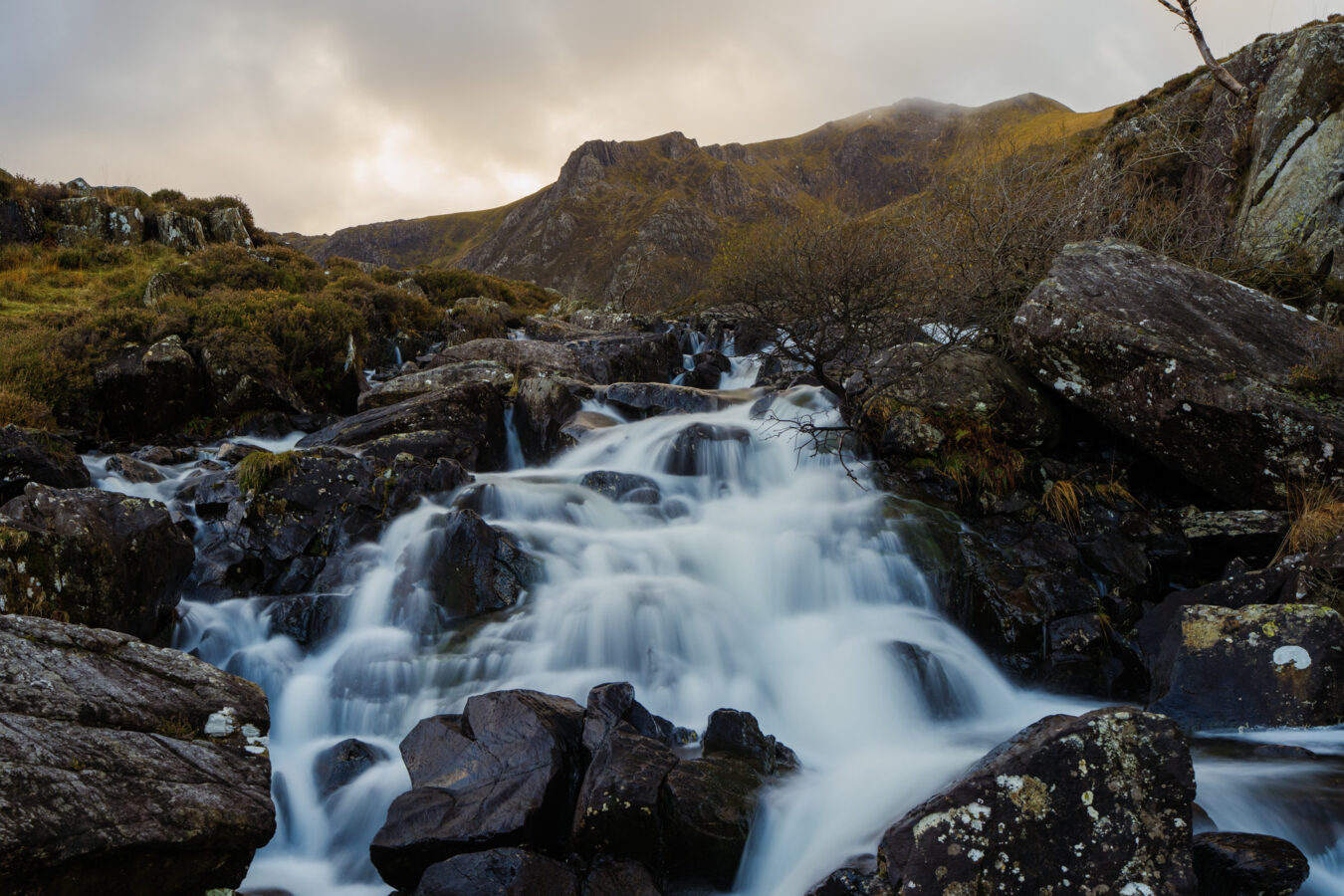
Video
Check out my vlog about Cwm Idwal.

How To Get There
The main car park is located just off the A5 near the Cwm Idwal Visitor Centre, where you’ll also find toilets, takeaway refreshments, and practical information. Parking costs £3 for up to four hours or £6 for the day (valid until midnight). Please note that overnight parking is not permitted.
Additional parking can be found along the A5 near Llyn Ogwen, mainly in lay-bys. Bear in mind that this is a very popular area, and car parks fill up quickly even on weekdays outside school holidays, so I recommend arriving early.
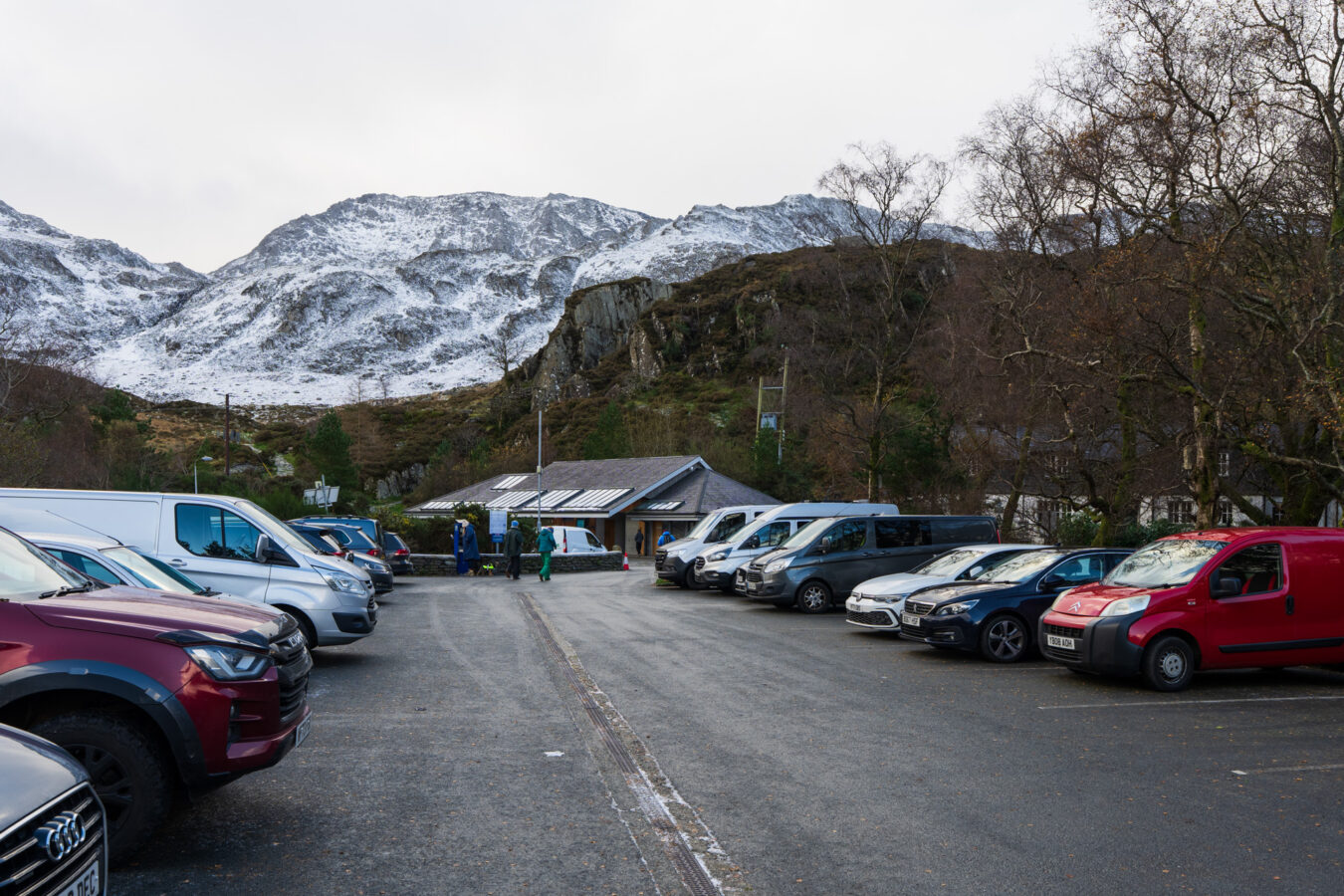
See Dyffryn Ogwen car park on
Google Maps | Apple Maps
Alternatively, the T10 bus (Bangor–Corwen route) stops at Llyn Ogwen, just a one-minute walk from the visitor centre. You can check the timetable on Traveline.cymru.
Another parking option, if all spaces near the Cwm Idwal Visitor Centre are taken, is in the village of Bethesda. From there, the T10 bus can take you from the village to Llyn Ogwen.
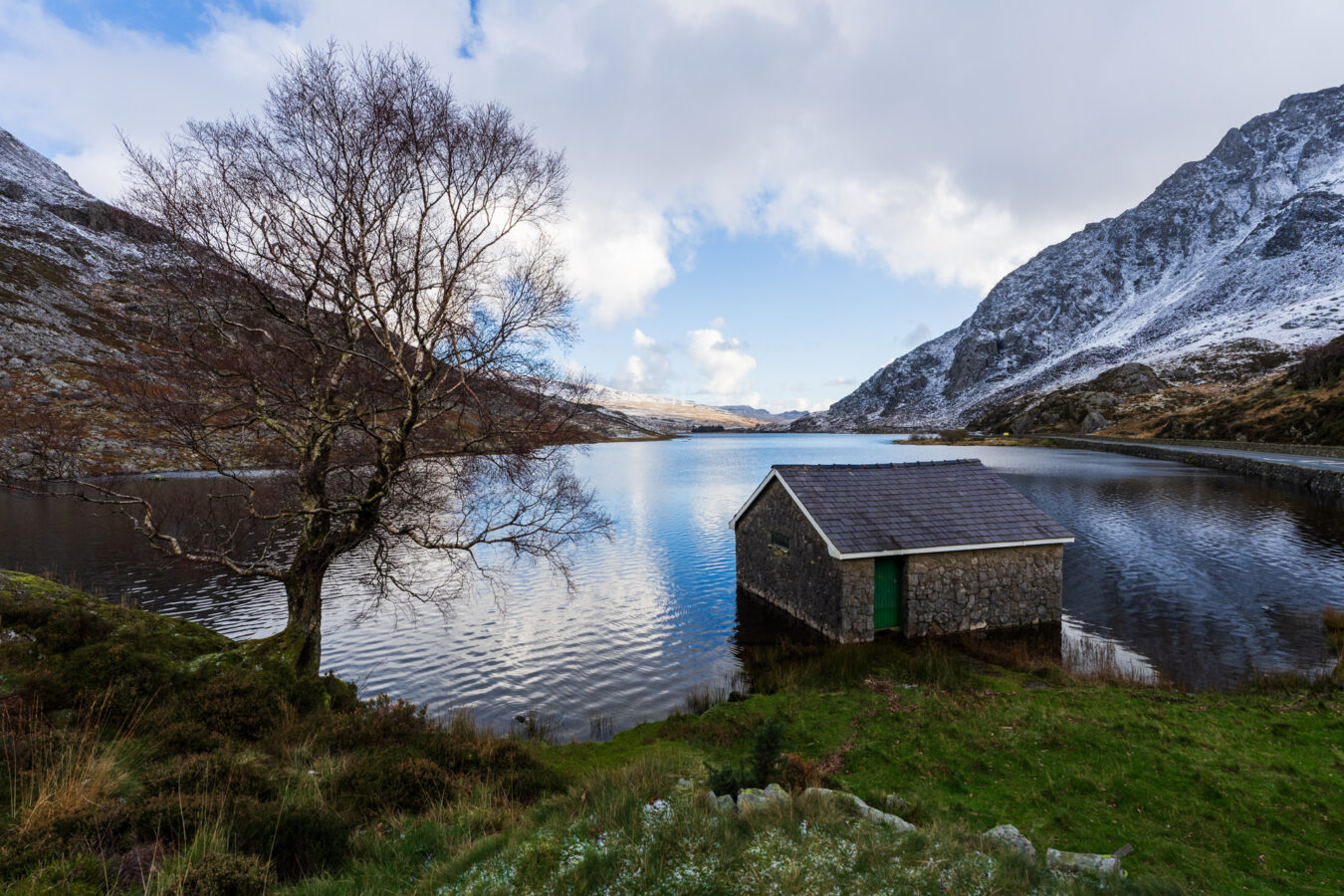
See Bethesda car park on
Google Maps | Apple Maps
The Eryri website also mentions the Bws Ogwen Electric Bus Service, which operates a fleet of two small buses. It was initially launched to serve the local community. The service is said to run every two hours from April to October; however, at the time of writing, I cannot find a timetable, and the official Facebook page appears to be unavailable, so it may no longer be in operation.
Trail and Map
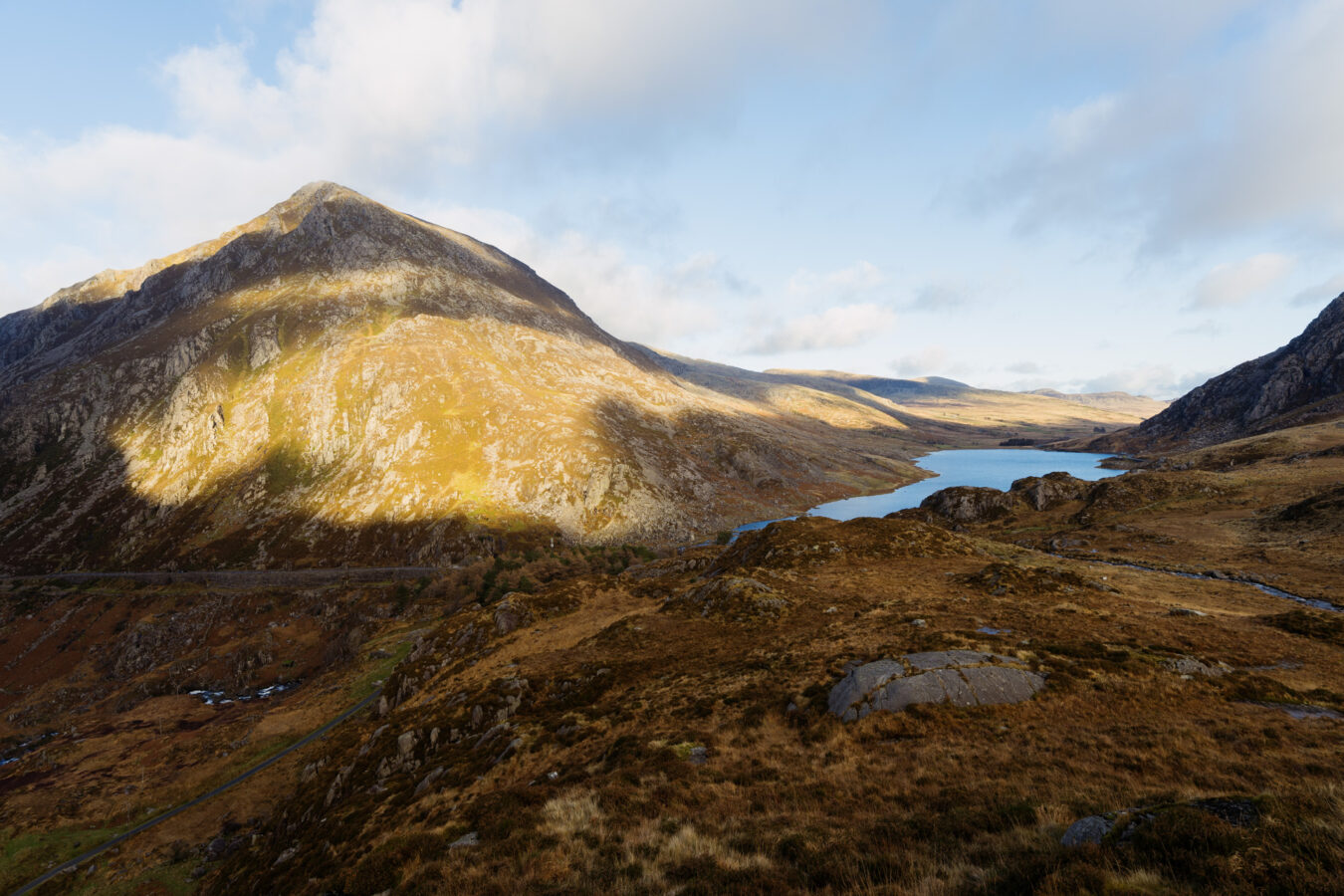
The easiest walk takes you from the Cwm Idwal Visitor Centre up to Llyn Idwal. It is a gentle route over a mixture of rock and dirt, very easy to follow, and the lake can be reached in around half an hour. The shortest option then follows the path around the lake before returning the way you came. You can also veer off the main path to enjoy excellent views over the Ogwen Valley and Llyn Ogwen.
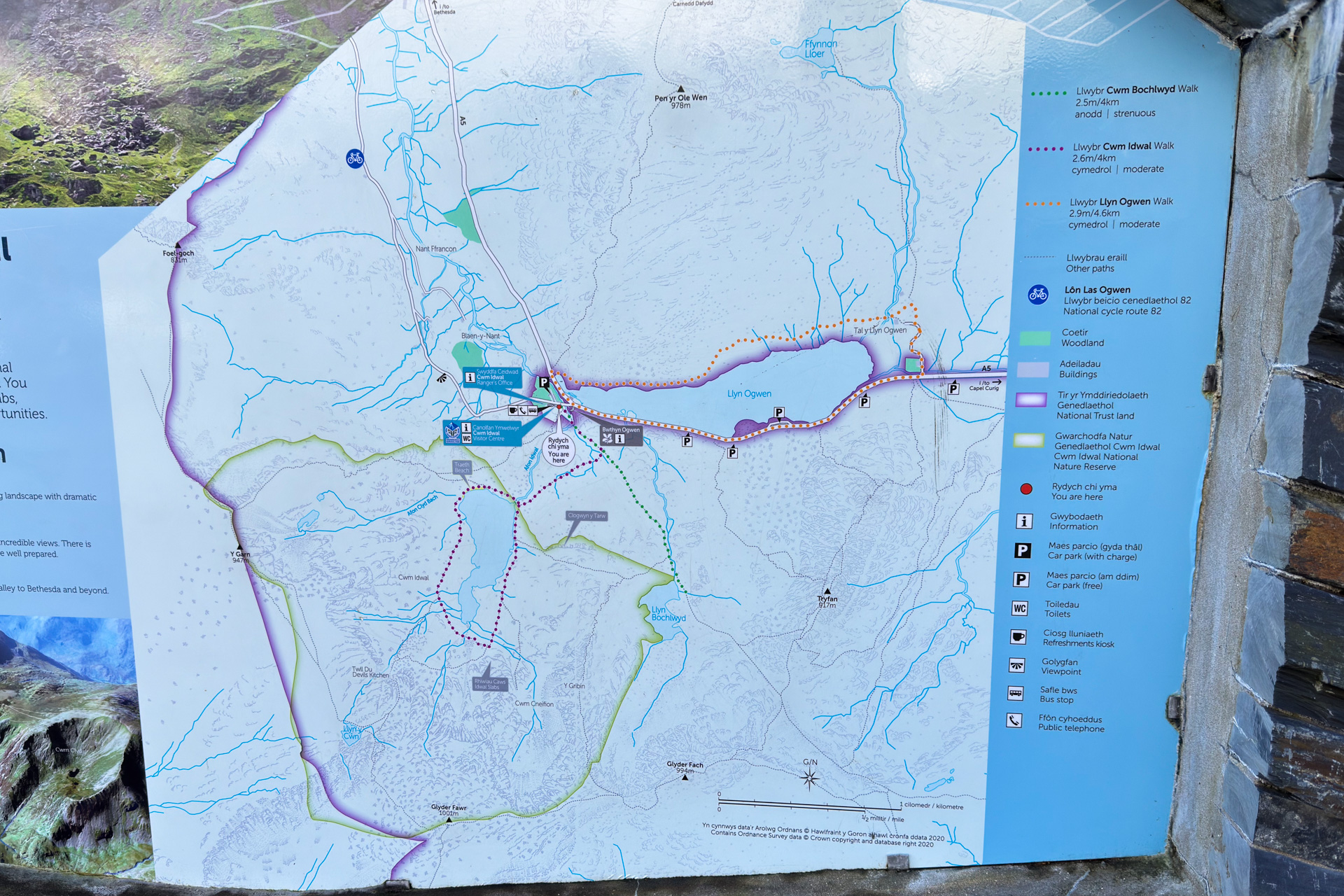
At the southern end of Llyn Idwal, the path forks. The left-hand option climbs higher towards the Idwal Slabs — a popular rock face for climbers — before descending to the western shore of the lake. This detour is rough and strenuous, with a few sections requiring some light scrambling.
Another path branches off earlier in the walk, before reaching the lake, and leads to Llyn Bochlwyd. This route is classified as hard and strenuous.
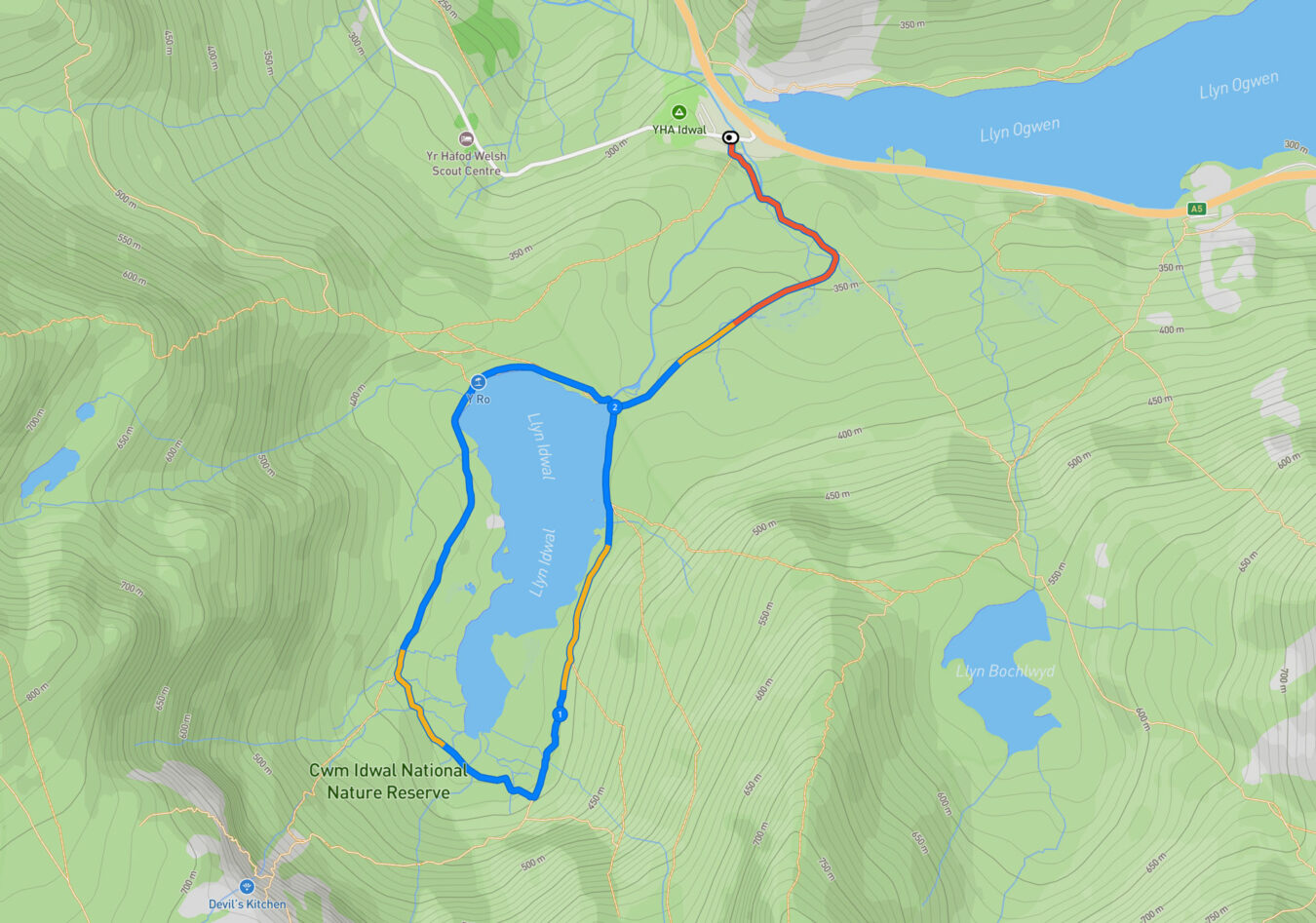
Cwm Idwal Circular Walk
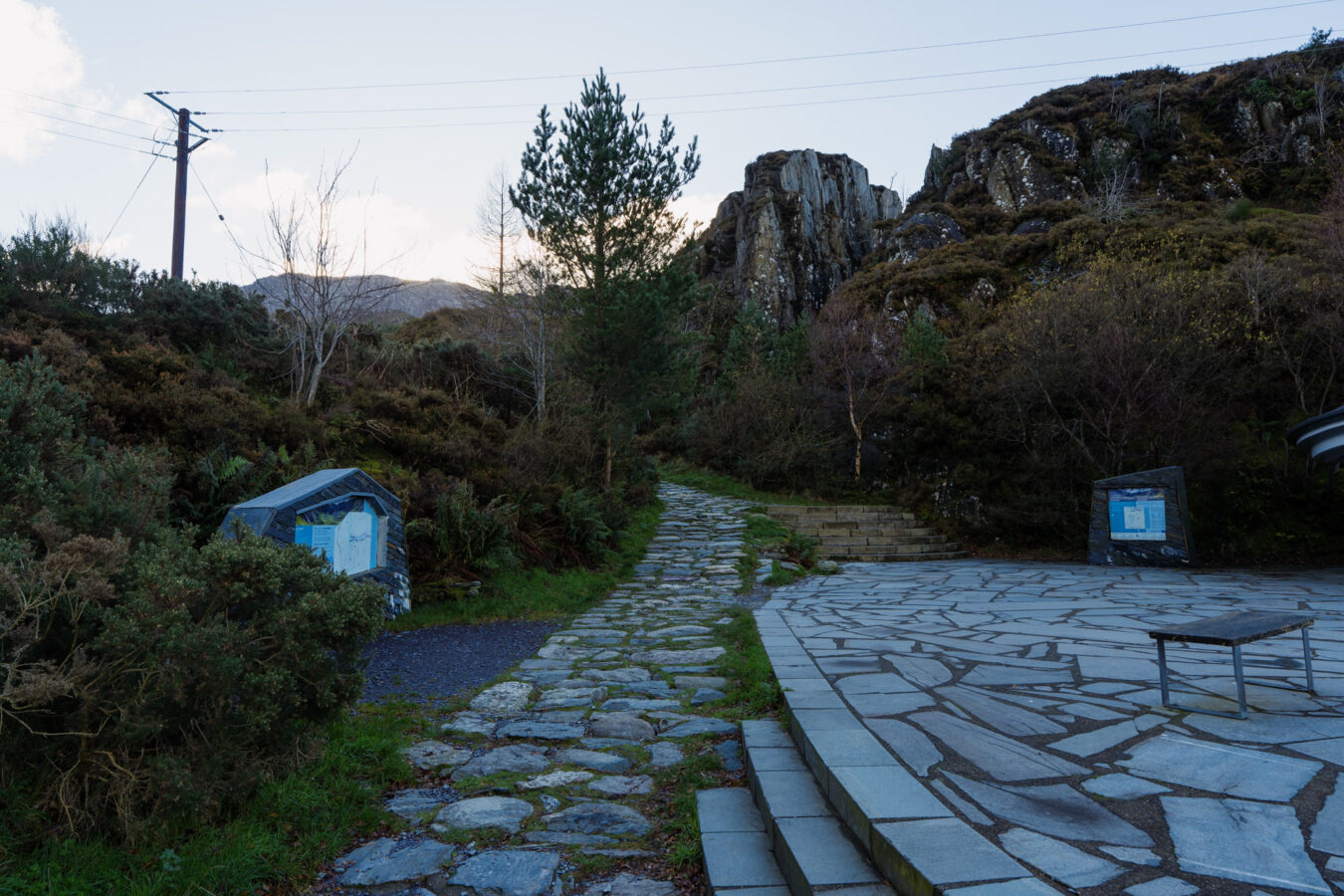
Facing the Cwm Idwal Visitor Centre, take the rocky trail on the left, which leads up to a gate and a beautiful wooden bridge, with dramatic cascades on the right. Just before the gate, you’ll find a set of stones on your left, each with a carved hole to help you identify the surrounding mountains.
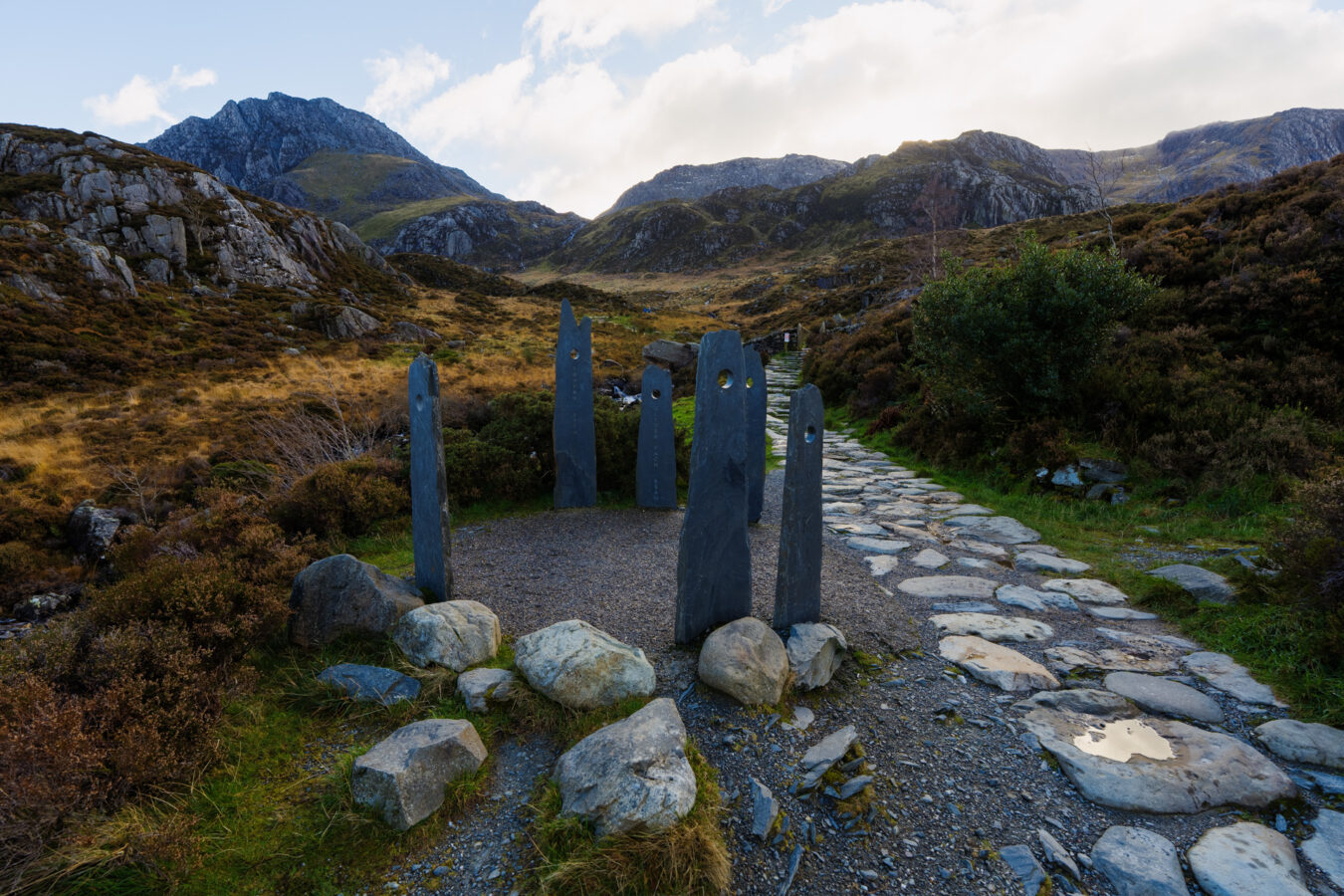
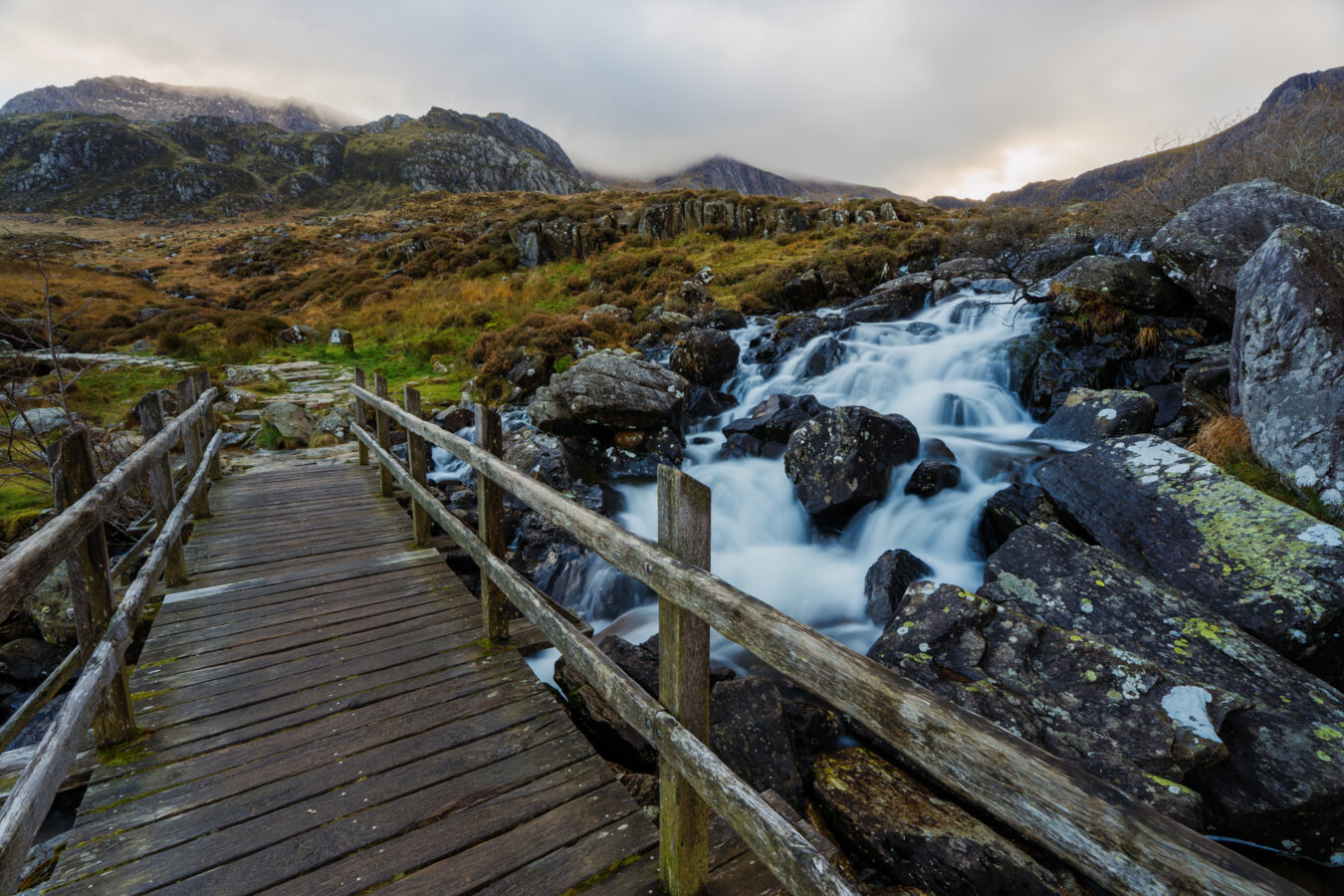
After crossing the bridge, simply follow the well-defined rocky path as it climbs higher. After approximately 350 metres (380 yards), the trail veers right towards the west and the lake. You can veer off the path to the left to enjoy elevated views of Llyn Ogwen, although similar viewpoints appear later on. Here, you’ll also notice a second path branching off to the left; this leads to Llyn Bochlwyd and is a more difficult walk.
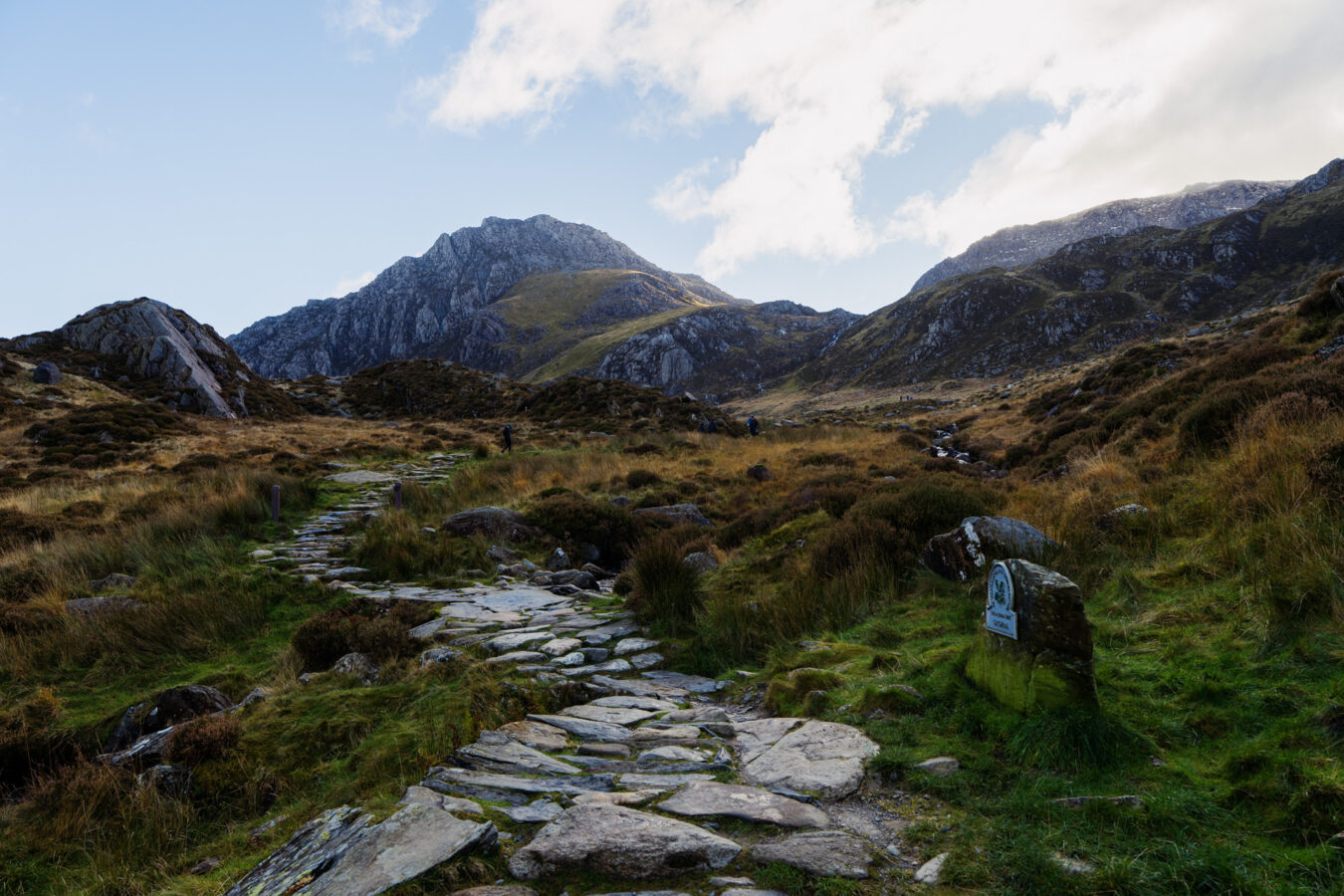
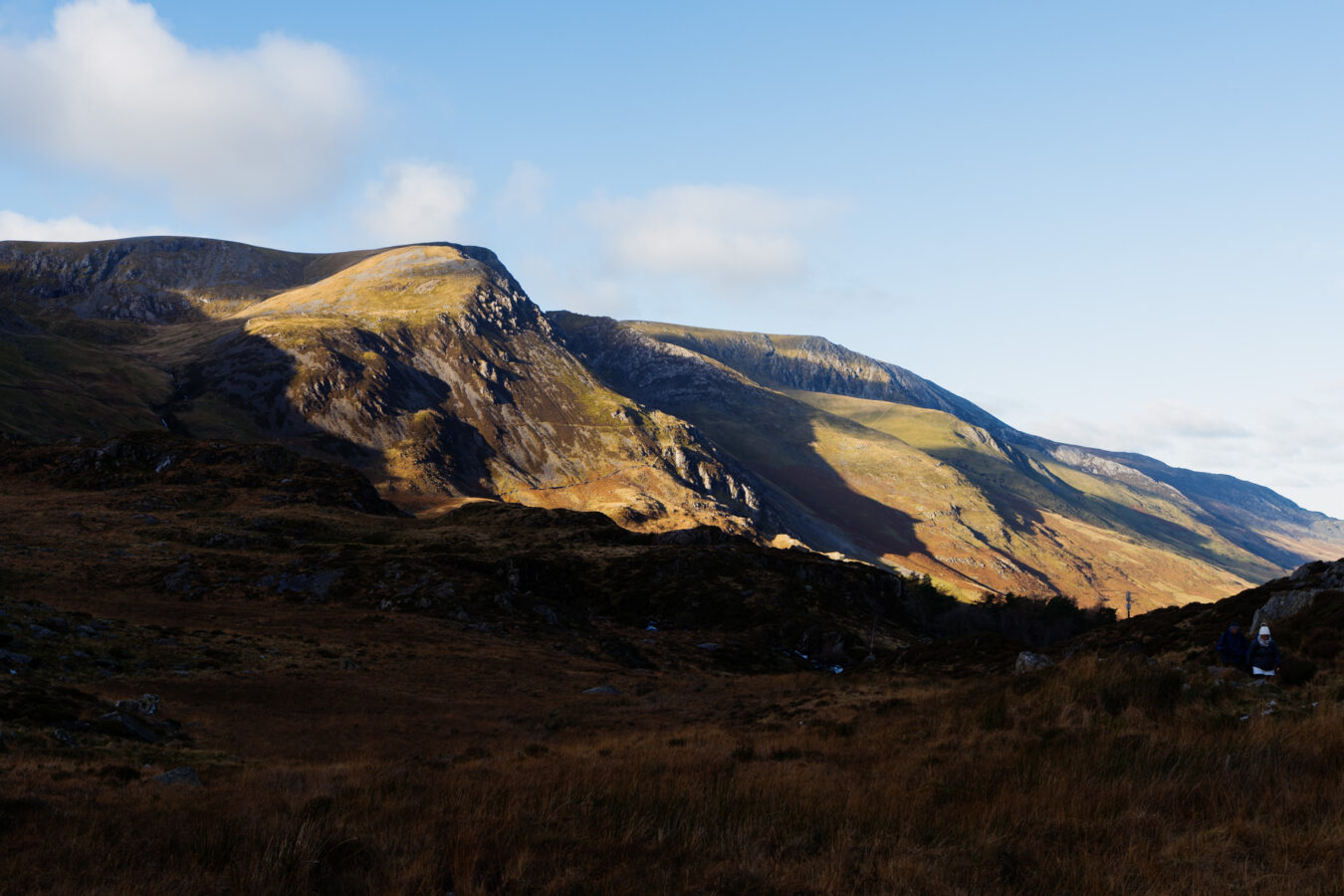
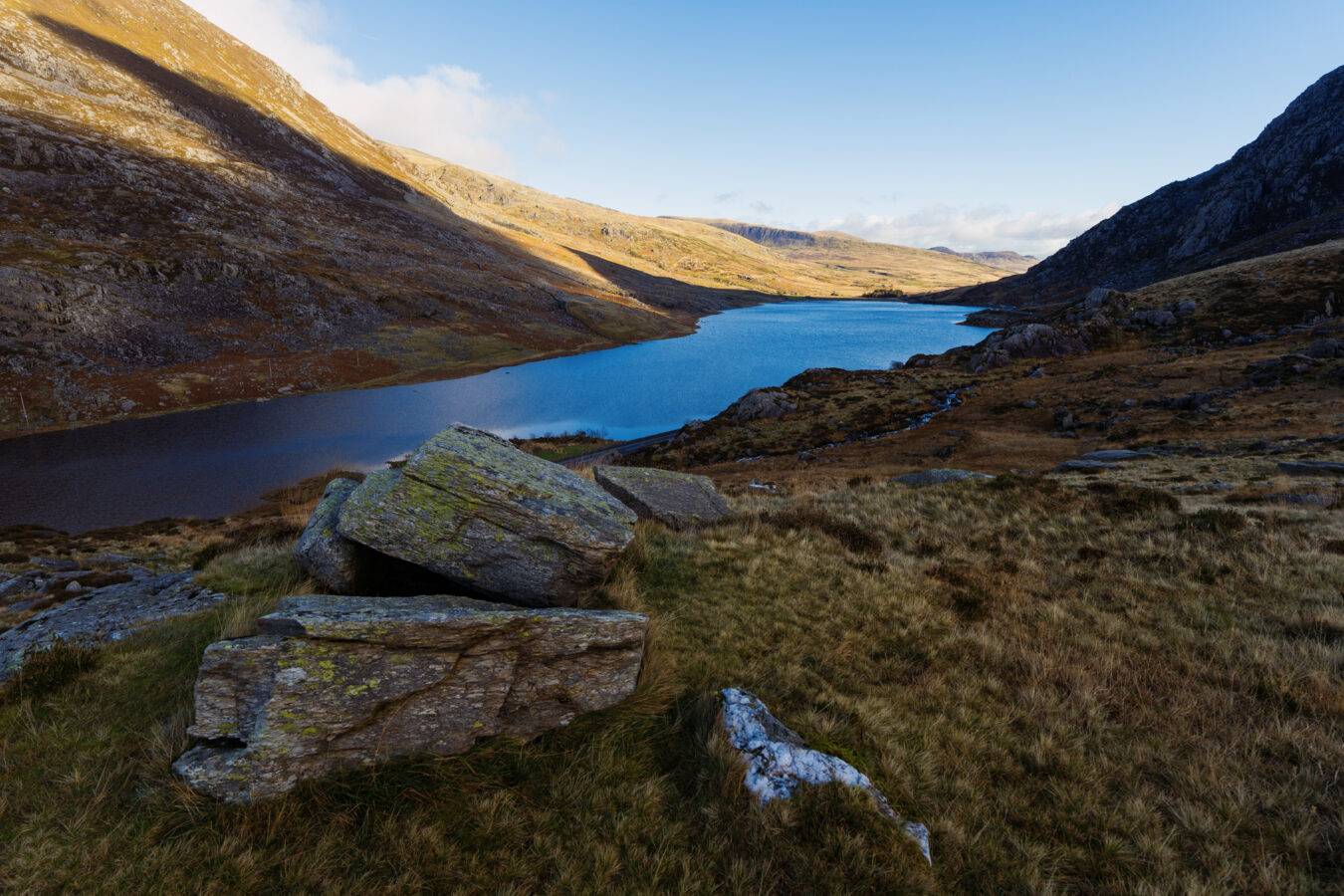
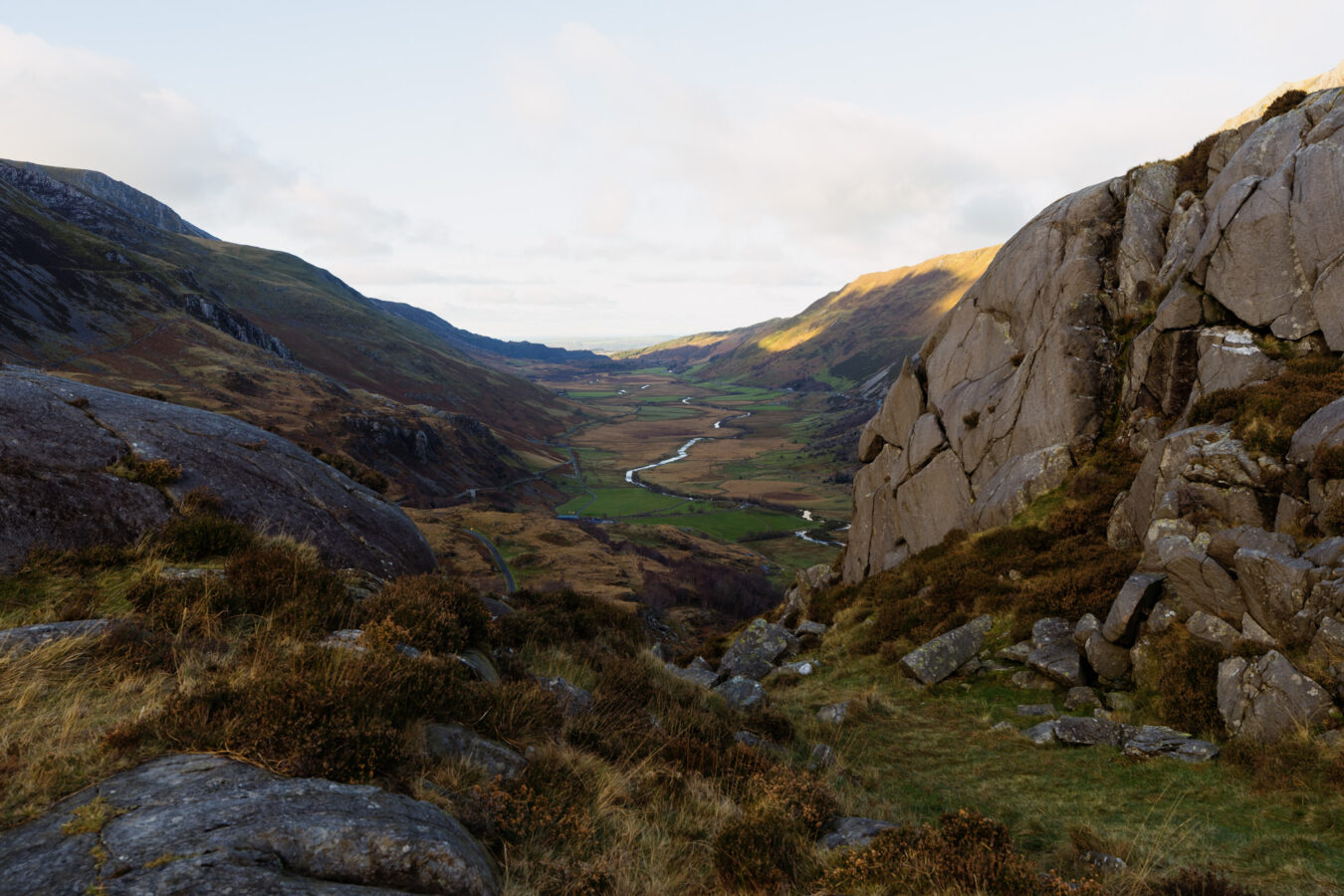
Continue along the main path towards Llyn Idwal, crossing a small stone bridge. You will soon reach the lake. You can again venture off the path to the right for views over the valley and Llyn Ogwen.
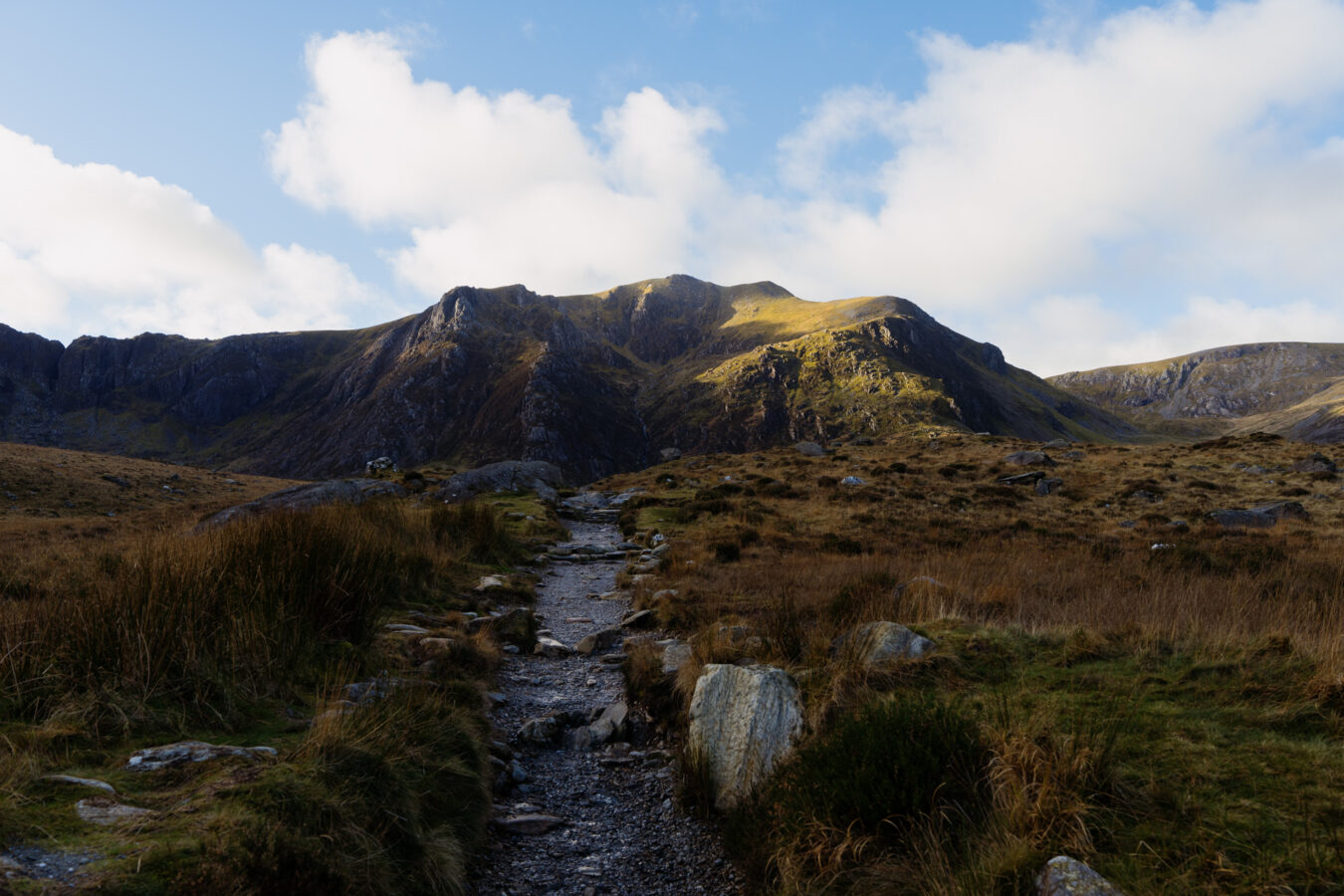
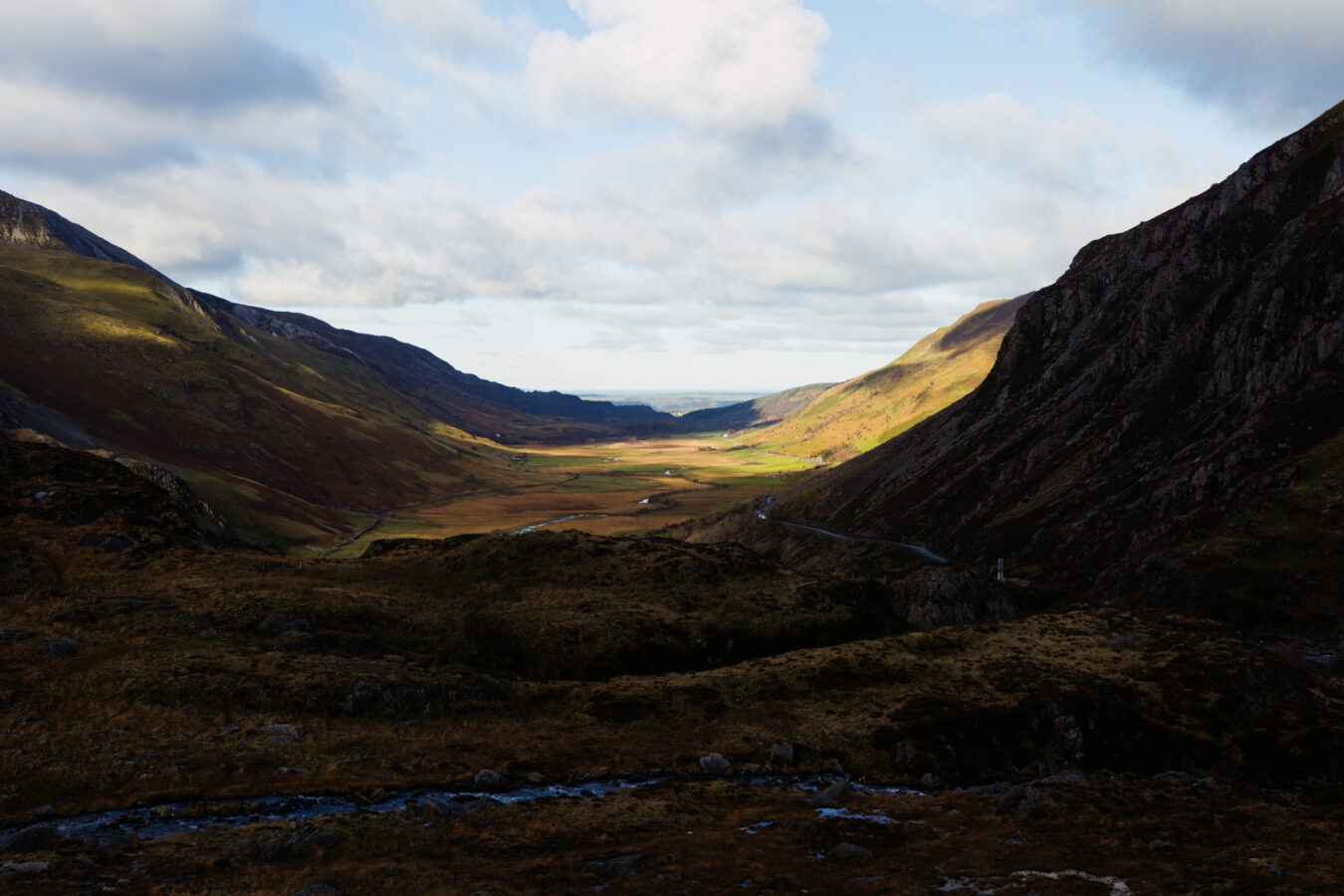
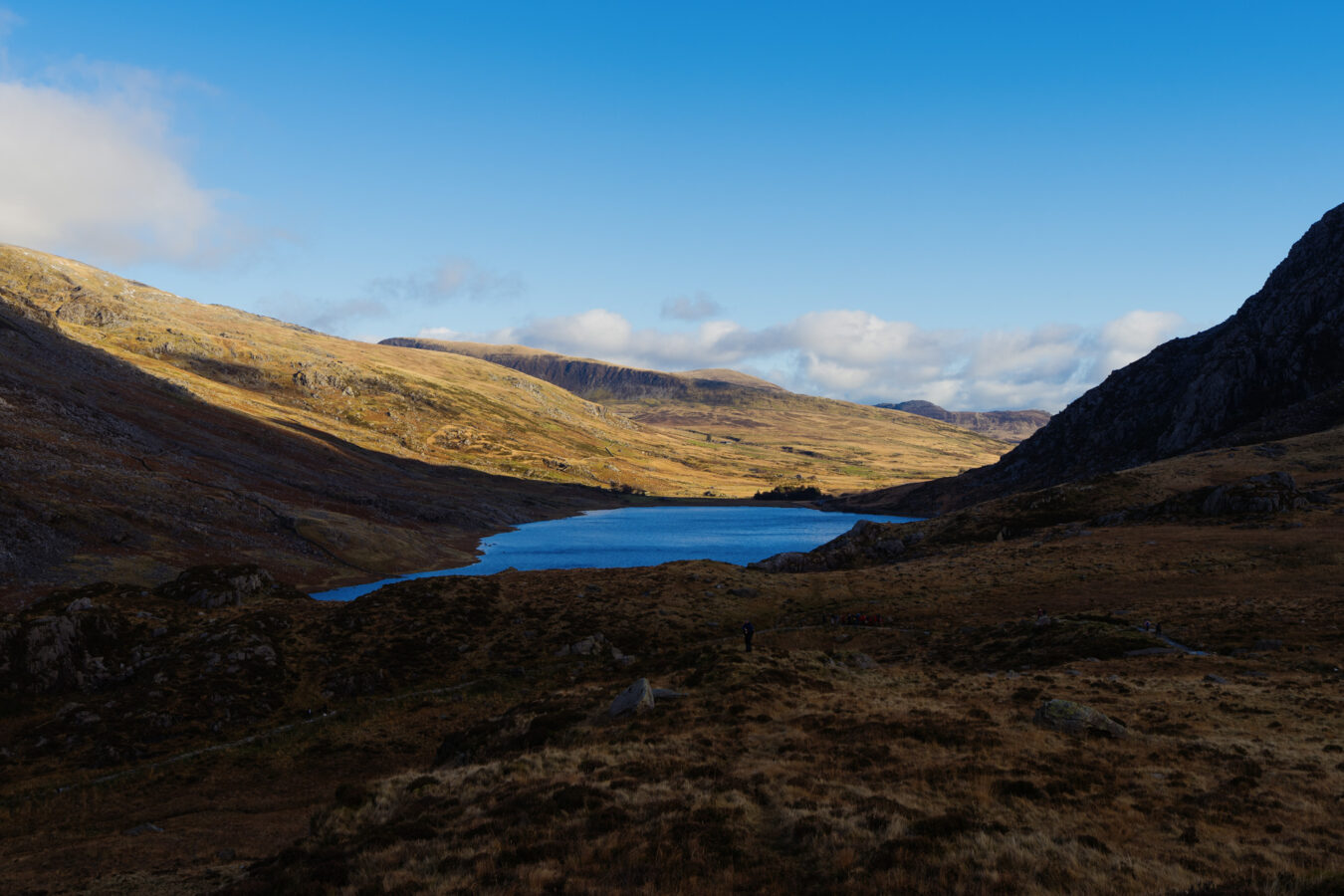
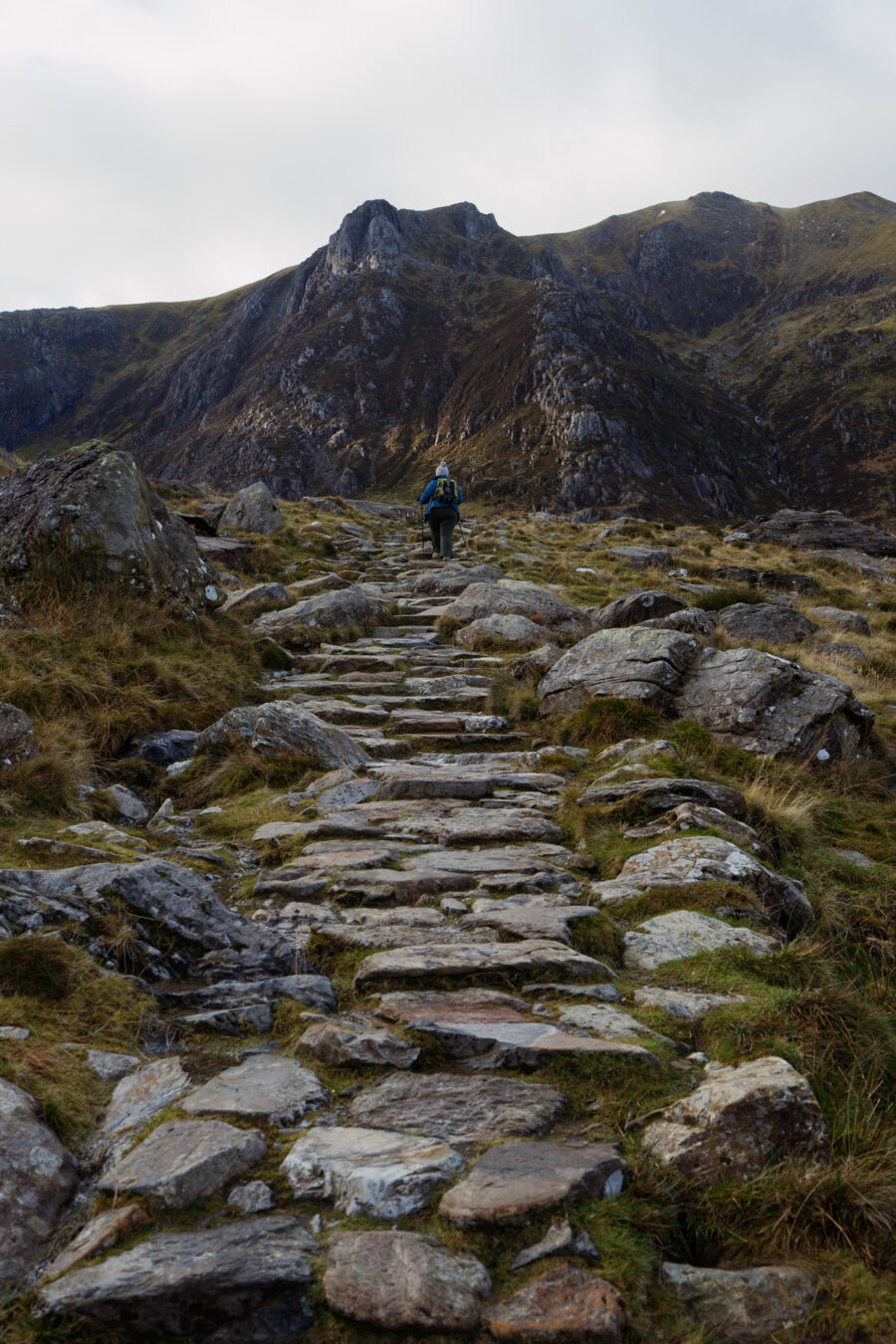
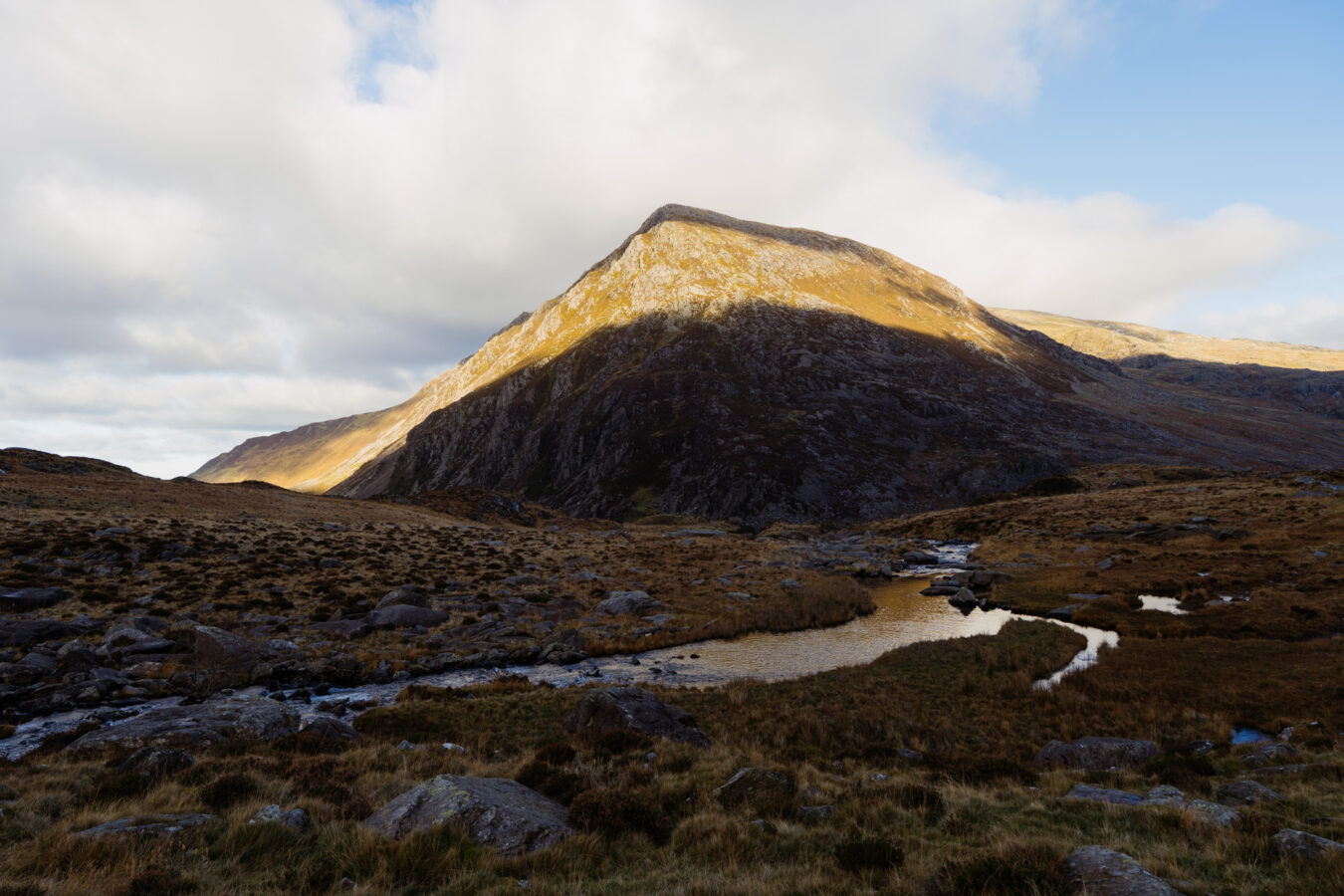
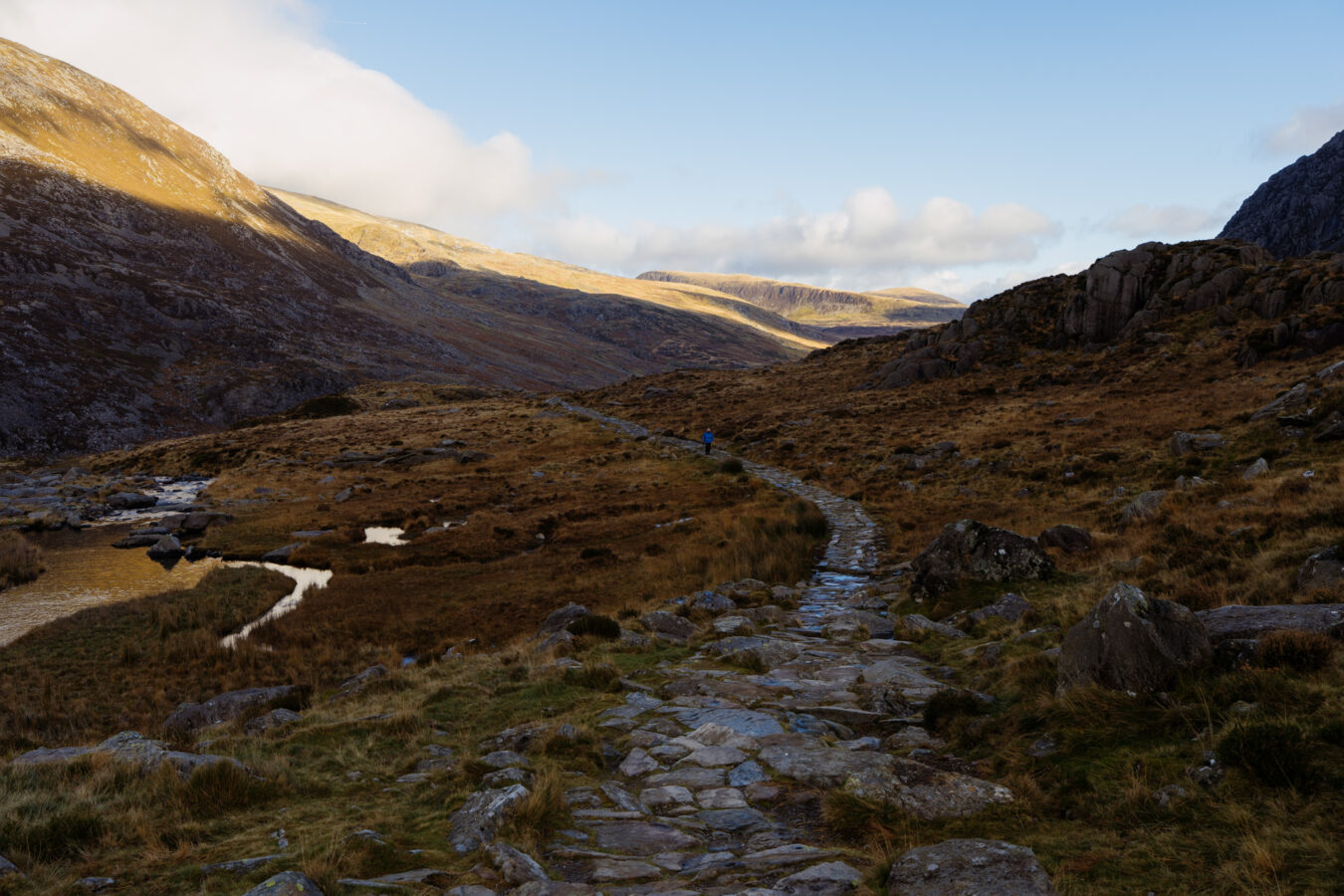
On reaching the lake, take a look at the Darwin Idwal Boulders on your left — a group of rocks originally deposited through a glacier crevasse and first recorded by Charles Darwin during his field visit in 1842.
quick facts about cwm idwal
- Glacial activity created the bowl-shaped landscape, which is one of the UK’s best examples of a “hanging glacial valley”.
- Some of the plants here have survived since the Ice Age, and there is a variety of wildlife all year round.
- The world-renowned biologist Charles Darwin visited Cwm Idwal multiple times during the first half of the 19th century.
- His studies here would later contribute to the most famous publication in science, On the Origin of Species.
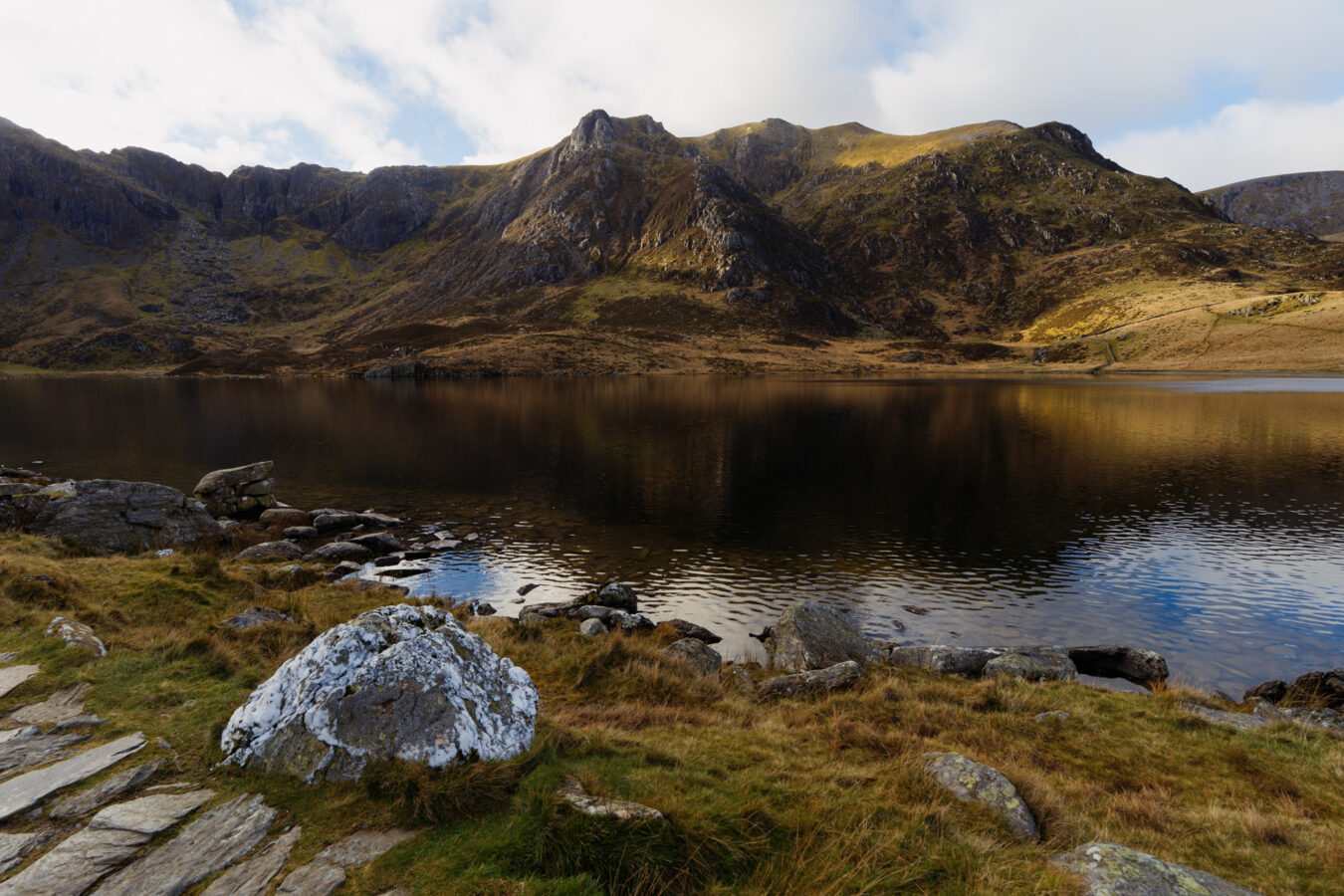
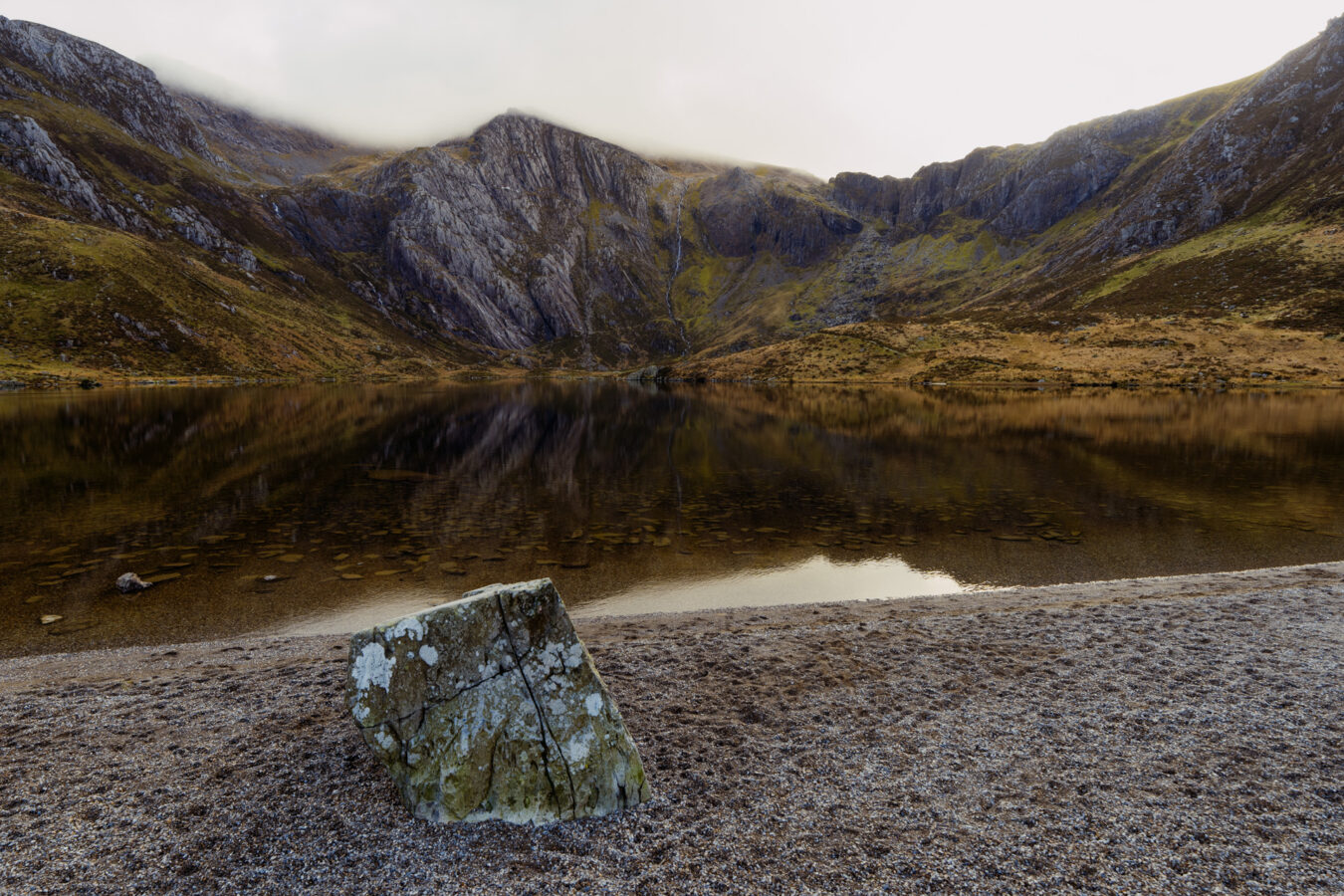
You can walk around the lake in either direction; I chose to go left. You’ll pass through a gate and notice several resting spots along the shoreline, with a few large rocks that make ideal places for a picnic. You may also spot wildlife here — I was lucky enough to photograph a grey heron perched on a rock in the middle of the lake.
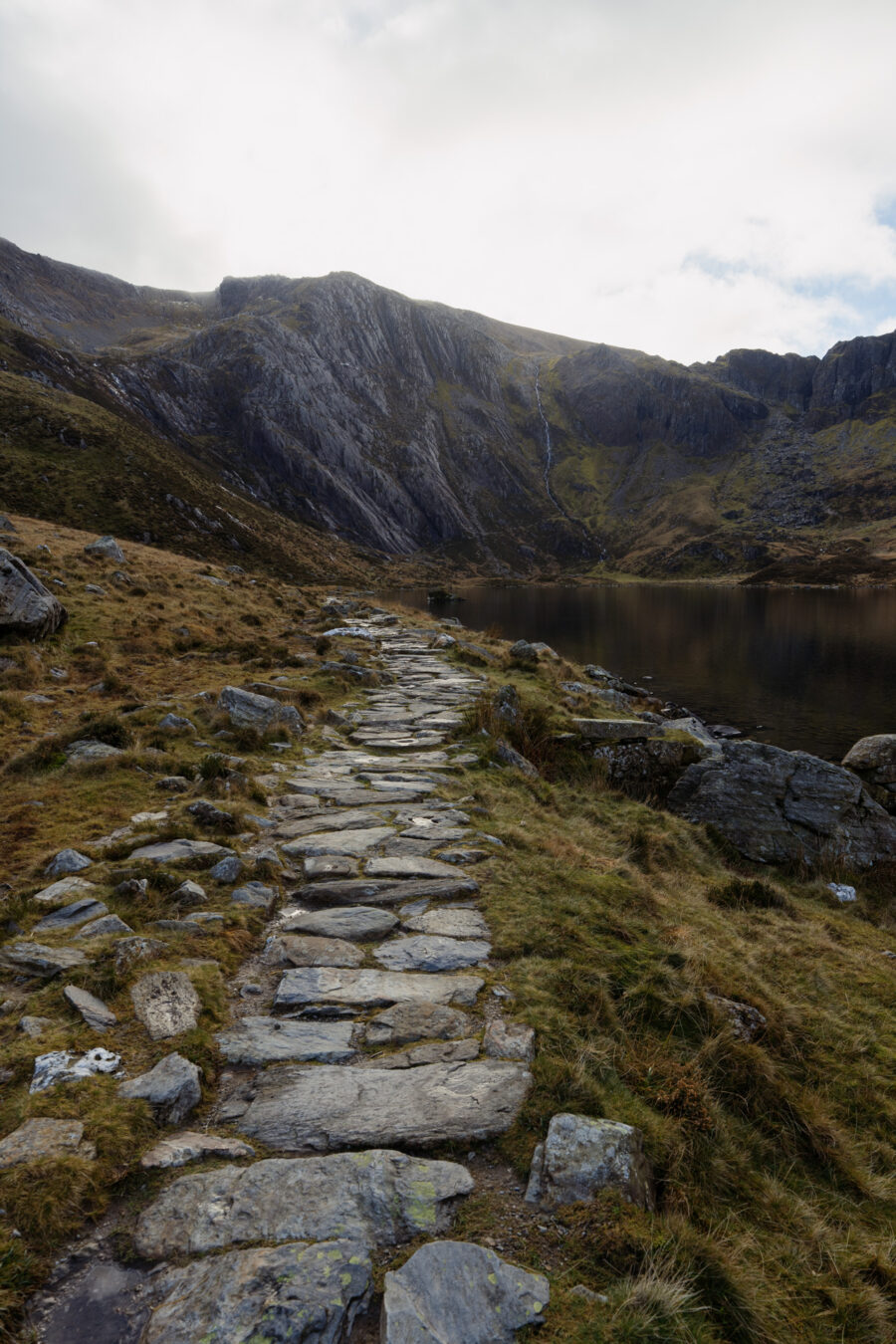
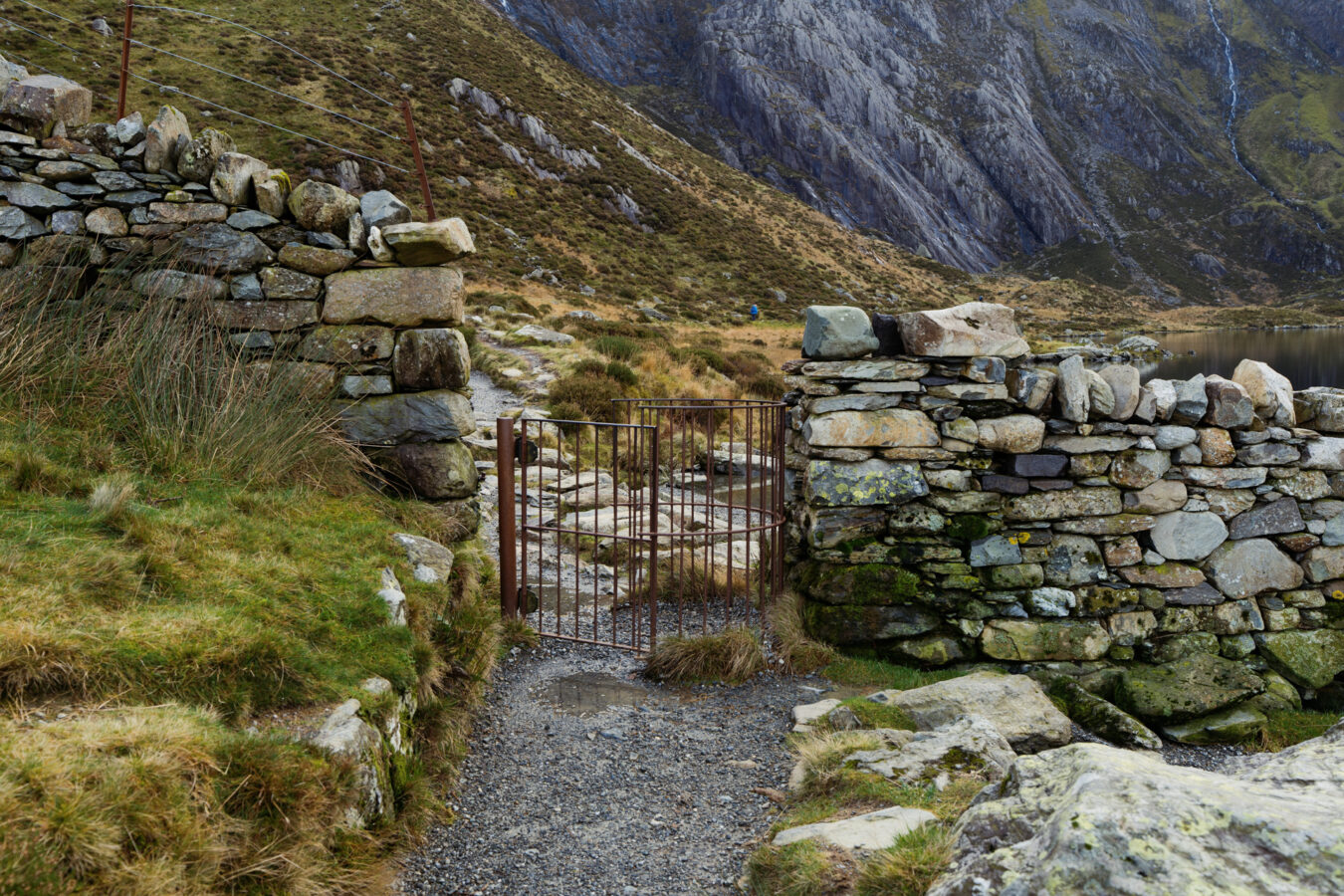
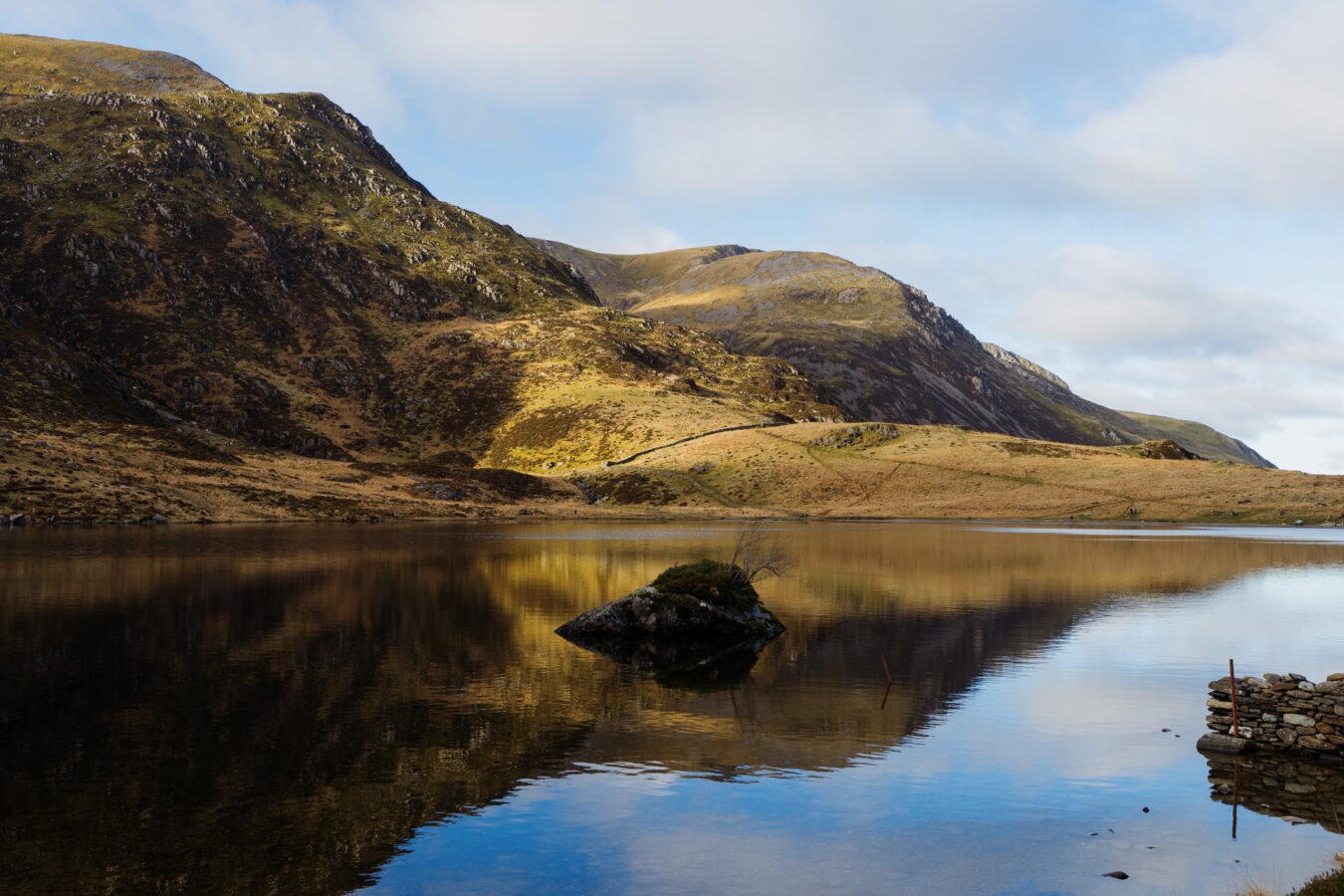
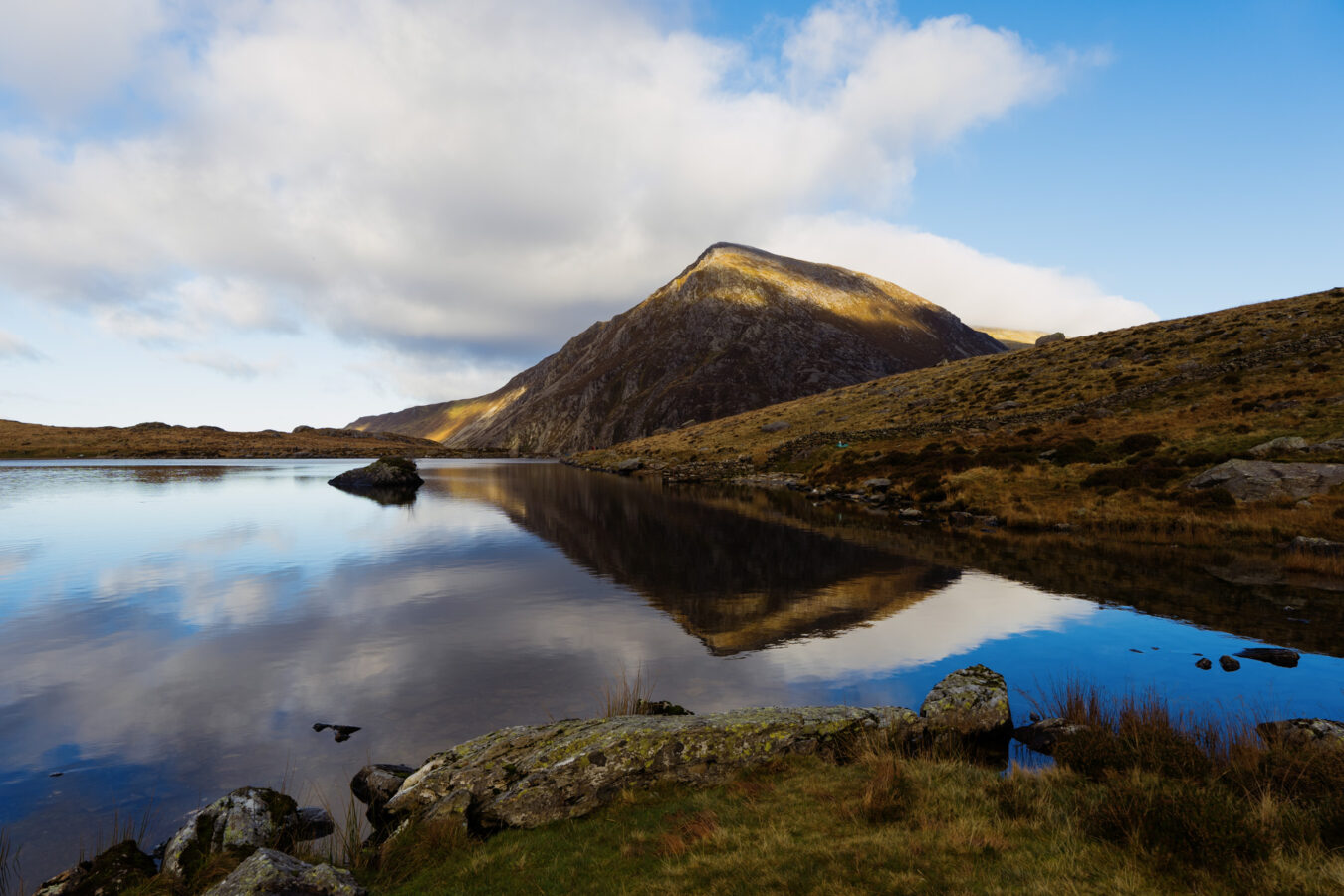
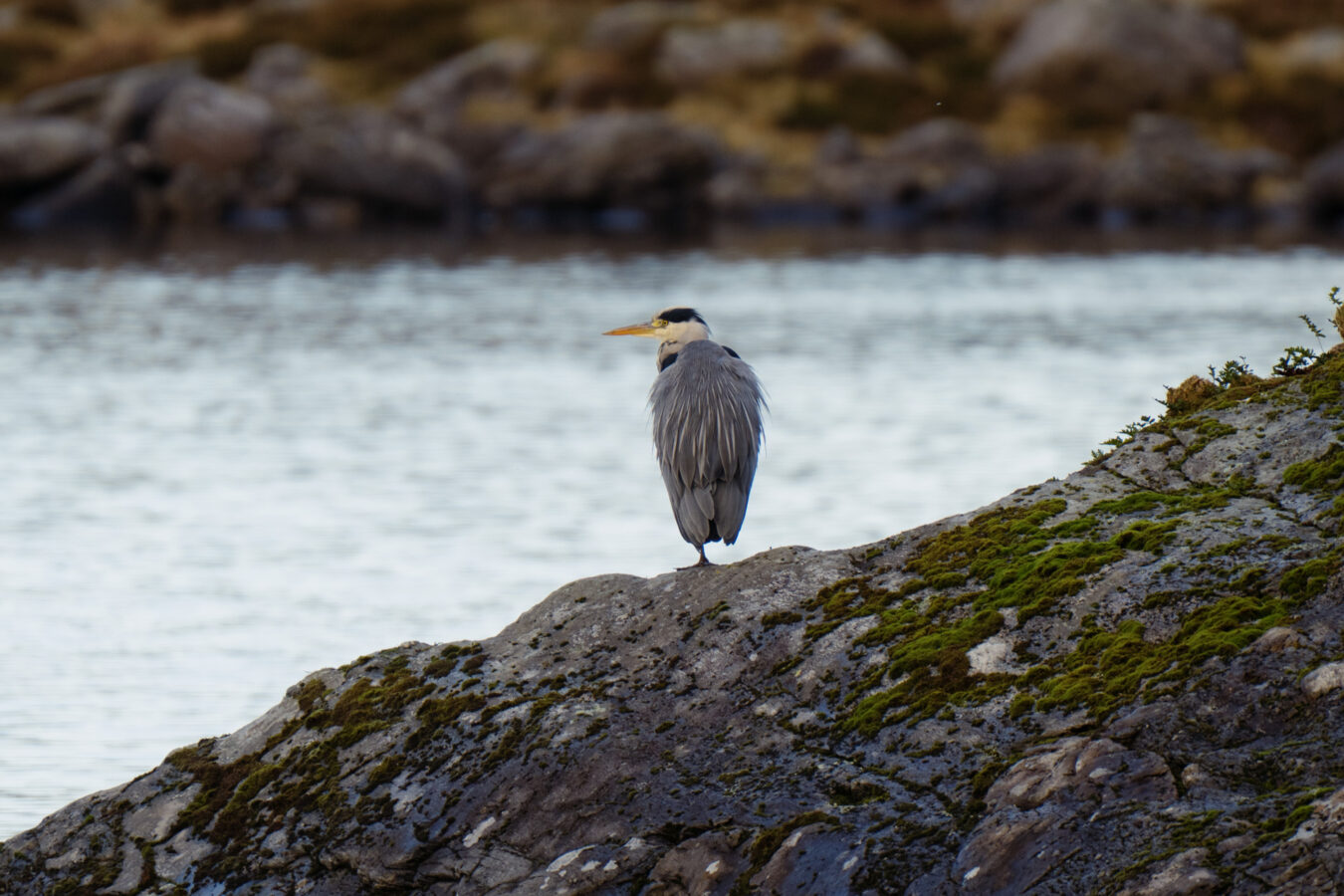
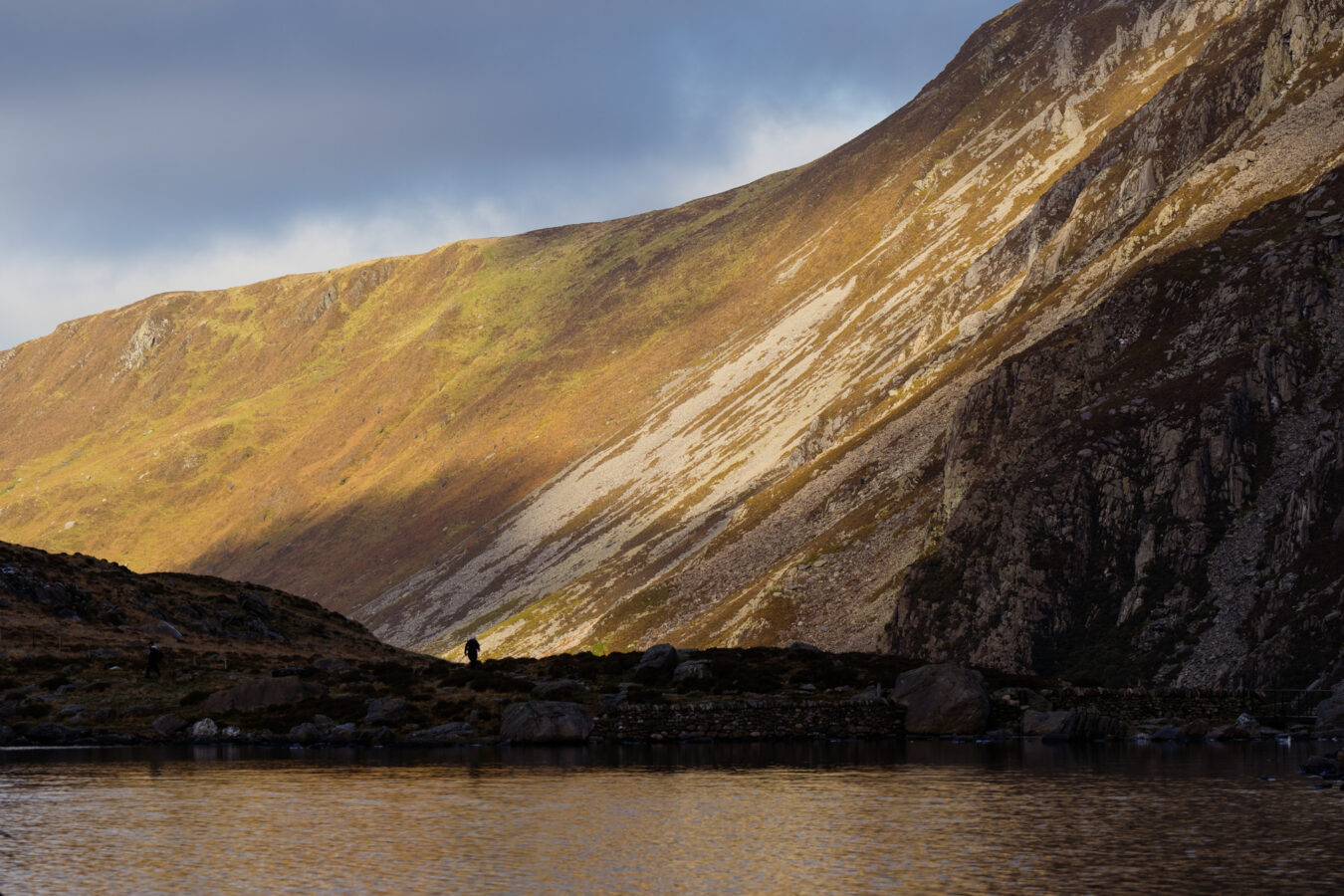
Continue along the rocky trail until you reach a fork. The left-hand path climbs higher and offers even better views of the area, but it is more strenuous and involves a bit of scrambling. Taking the right-hand path keeps you closer to the lake and makes for an easier stroll. This is the route I chose, and before long the stone path gives way to a dirt path as you reach the far side of the lake.
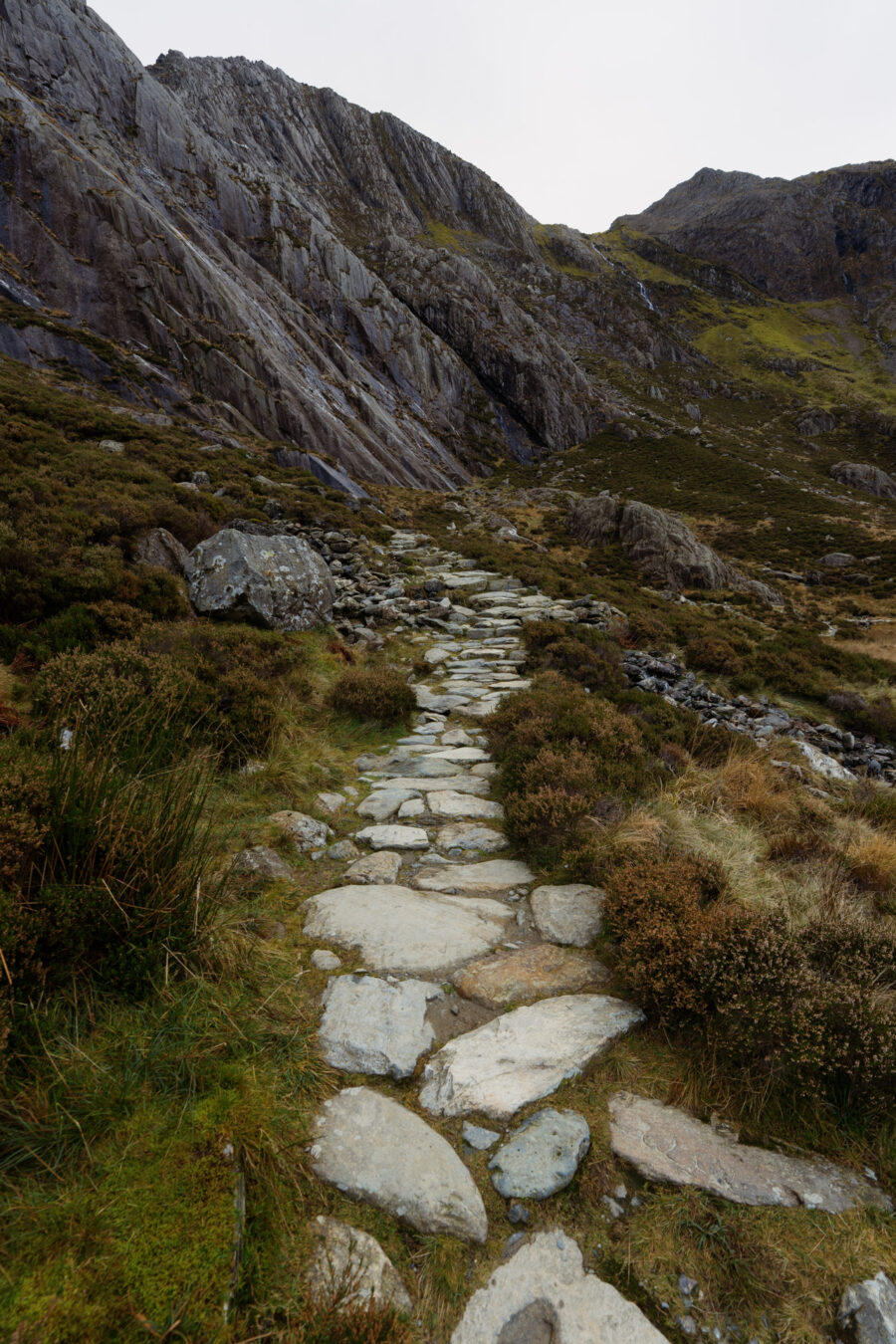
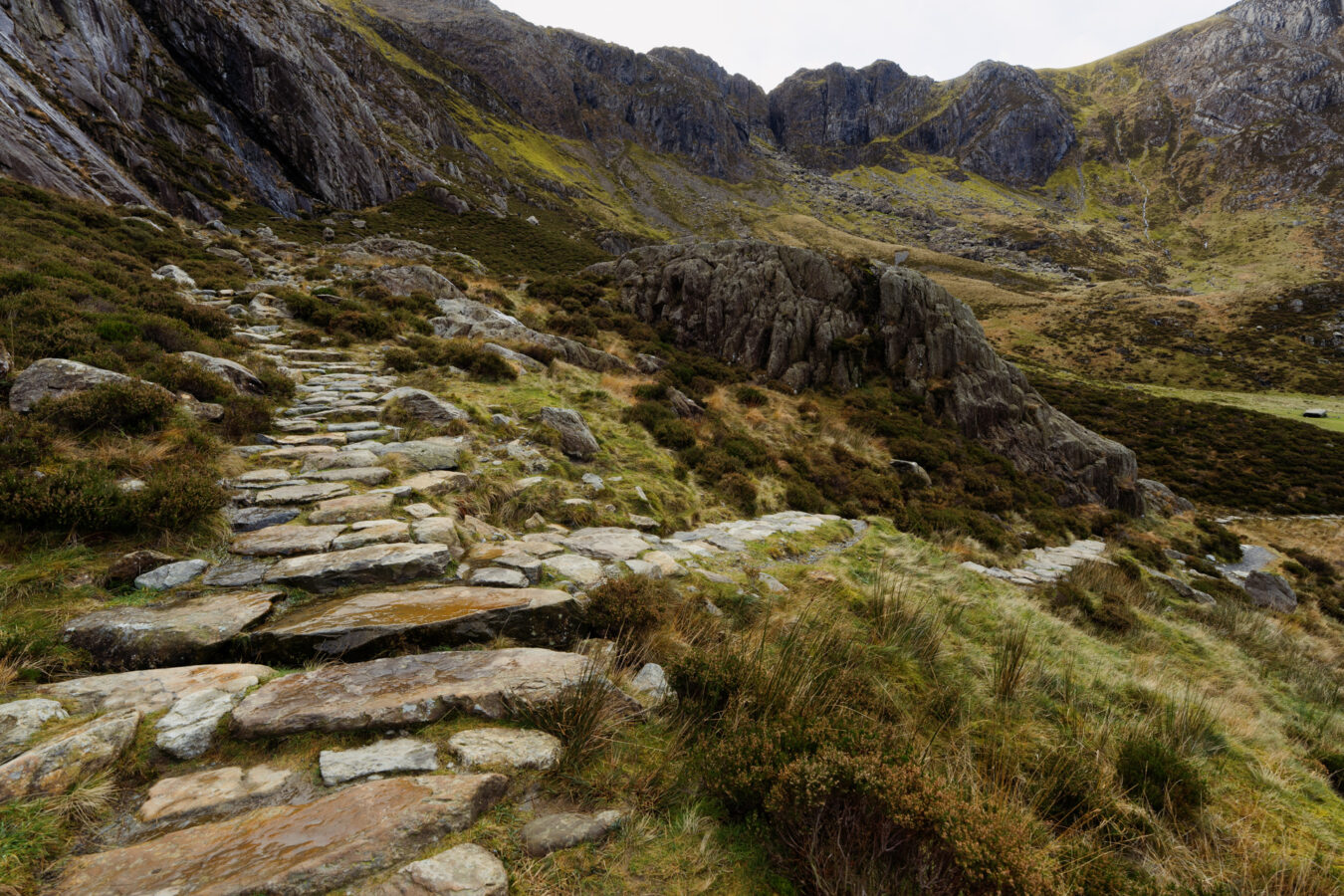
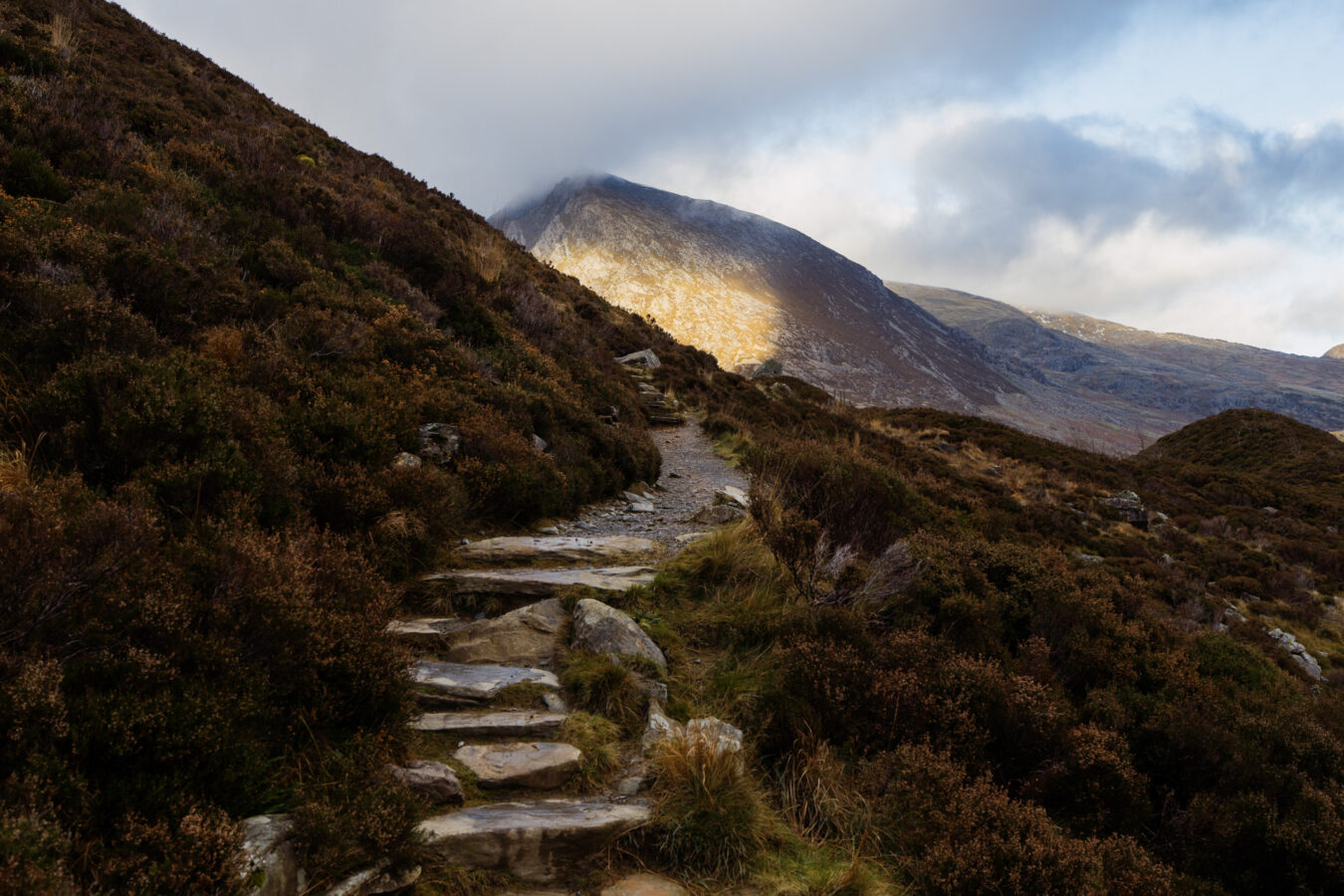
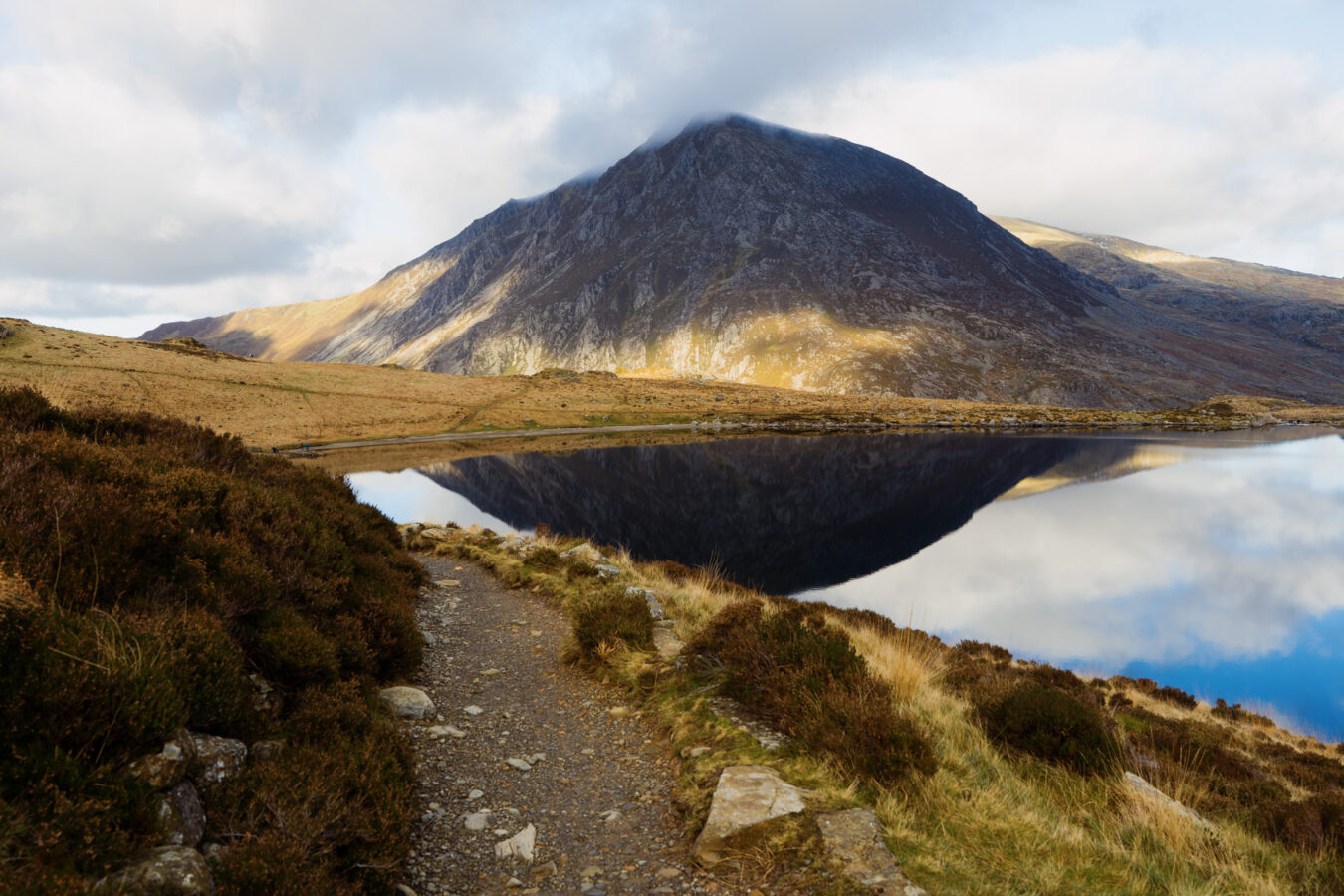
As you approach the northern end of the lake, you’ll notice a small sandy area and a little beach right by the shore. If you venture slightly further north, with the lake behind you, you’ll find some of the best views over the valley and Llyn Ogwen below.
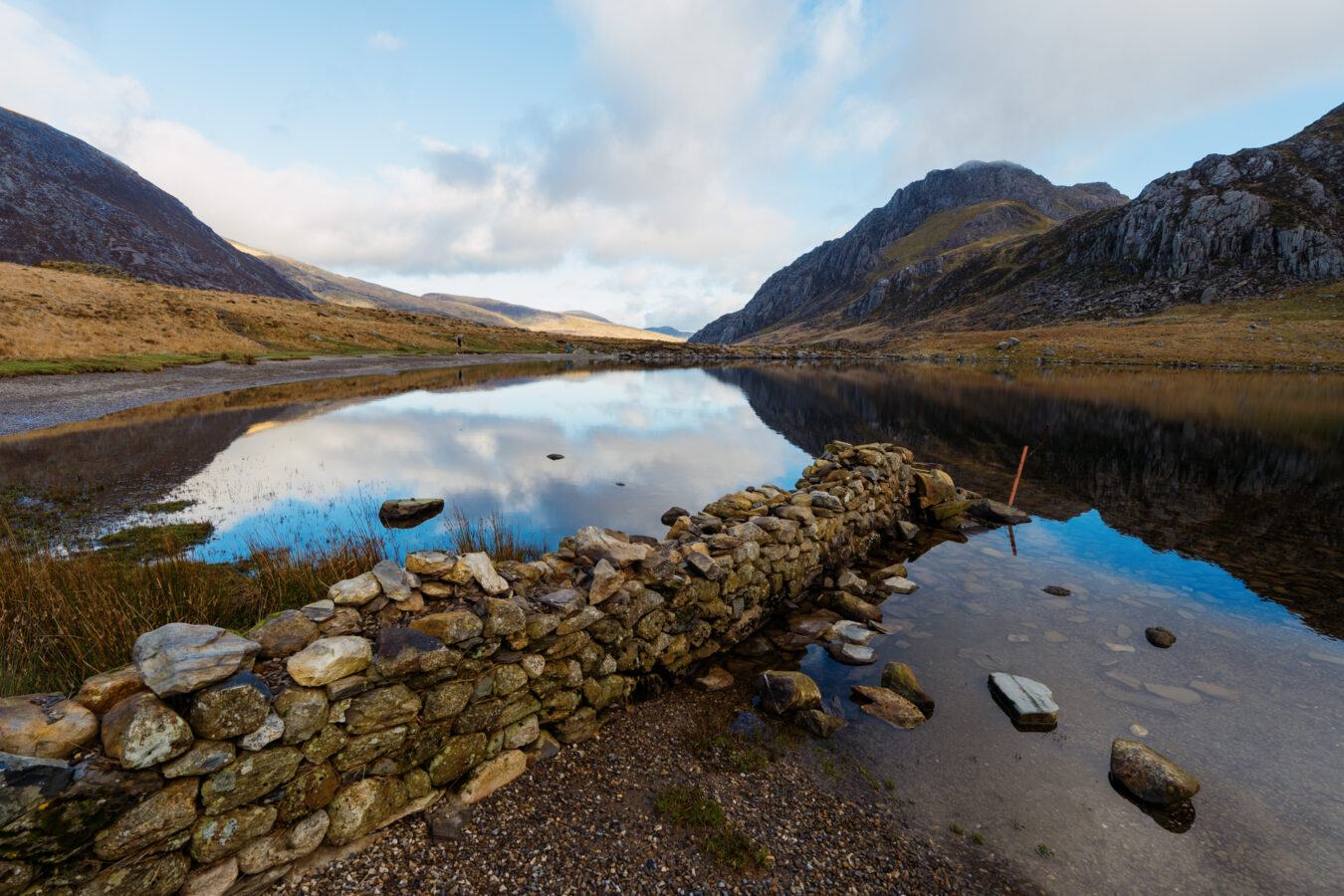
When you rejoin the circular path north of the lake, you’ll soon reach the point where you started, after passing through a gate and crossing a metal bridge. From here, you can begin your descent back to the visitor centre.